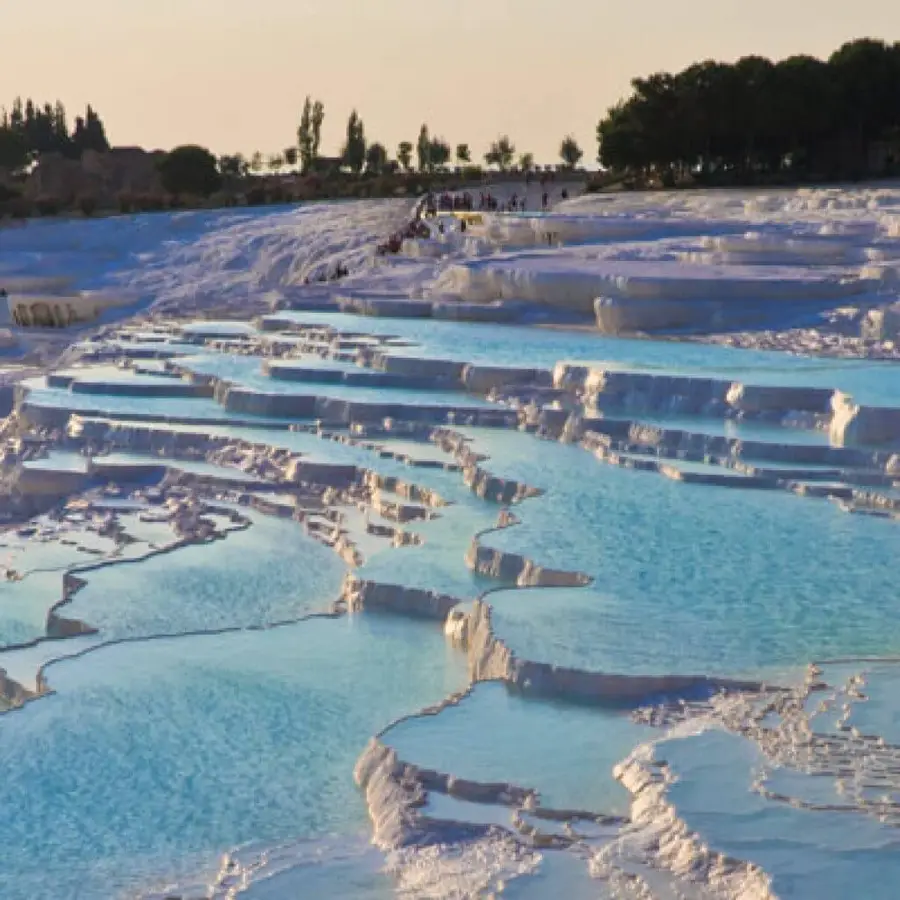
The travertines of Pamukkale are white limestone terraces built by warm, calcium-rich springs on a hillside above Pamukkale village in Denizli province. You visit them on foot, barefoot, along a single marked path through shallow pools that climbs from the village to the ancient city of Hierapolis on the plateau. A little planning makes a big difference: the right entrance, the right time of day and the right clothes turn a hot, crowded scramble into one of the best experiences in Turkey.
This post is a hands-on visiting guide. For the background on how the terraces formed, the history of Hierapolis, where to stay and how to combine Pamukkale with Aphrodisias and Laodicea, see our main Pamukkale and Hierapolis guide.
Quick tips at a glance
- Go early or late. Sunrise and the two hours before sunset are the best times, with softer light and fewer people.
- Shoes off. You must walk barefoot on the travertines. Bring a bag for your shoes.
- Dress to get wet. Shorts or swimwear, and a towel.
- Protect yourself from the glare. Sunglasses, a hat and sunscreen, even in spring.
- Choose your direction. Walking downhill at sunset is the most rewarding, but uphill is easier on the feet.
- Leave time for Hierapolis. The ruins on top are part of the same visit.
Which entrance should you use?
There are three main ways in, and choosing the right one shapes your whole visit.
The south (lower) entrance in Pamukkale village
The lower entrance is at the foot of the travertines, at the edge of Pamukkale village. From here you take your shoes off almost immediately and walk uphill through the pools to the plateau. It is ideal if you are staying in the village and want to walk straight from your hotel, and it gives the classic experience of climbing the white slope.
The south gate on the plateau
The south gate is at the top of the hill near the travertines, on the road above the village. From here you reach the upper edge of the terraces, the Antique Pool and the theatre quickly. It is a good choice if you arrive by car and want to start at the top.
The north gate near Karahayıt
The north gate is on the plateau towards Karahayıt and leads in through the long North Necropolis and the Frontinus Street of Hierapolis. Walking from here to the travertines takes time, but it is the most atmospheric approach to the ancient city. Many travellers driving their own car enter here, explore Hierapolis, walk down the travertines and then return to the car by taxi or on foot.
Our suggestion for drivers: enter in the afternoon at the north gate, spend a few hours in Hierapolis, swim in the Antique Pool if you like, and walk down the travertines towards the village as the sun sets. Arrange in advance how you will get back to your car, or base yourself in the village and simply walk up and down from the lower entrance.
Best time to visit the travertines
The best time to visit the travertines is at sunrise or late afternoon into sunset. The terraces face west, so the evening light turns them gold and pink, and the reflections in the pools are at their best. Day tours from the coast usually arrive in late morning and leave by late afternoon, so both ends of the day are much quieter.
By time of day
- Early morning: cool, calm and quiet, with soft light. The pools often look still and mirror-like. Perfect for people who dislike crowds.
- Midday: bright, hot and busy. The white surface reflects the sun strongly. Use this time for the shaded parts of Hierapolis or the museum instead.
- Late afternoon and sunset: the most beautiful time on the terraces. It does get busy around sunset itself, so arrive a little earlier to find your spot.
By season
- Spring (April to June): green fields below, comfortable temperatures and pleasant water. Many people's favourite season.
- Summer (July and August): hot and dry on the exposed plateau. Visit at the ends of the day and carry plenty of water.
- Autumn (September and October): warm water, clearer skies and fewer crowds than summer.
- Winter: cool or cold air, but the spring water still feels warm. Very quiet. Expect a chilly walk to your shoes after the pools.
What to wear and what to bring
You will be barefoot and probably wet, so dress for that rather than for a museum visit.
Clothing. Shorts, a light dress or swimwear under loose clothes work best. Swimsuits are completely normal on the travertine path and in the Antique Pool. Trousers can be rolled up, but they often get wet anyway.
Footwear. Wear something easy to take off and put on, such as sandals. You will carry your shoes through the travertines, then need them again for Hierapolis, where the ground is rough and stony.
What to bring:
- A small bag or backpack for your shoes and valuables.
- A light towel, to dry your feet before putting shoes back on.
- Sunglasses, a hat and high-factor sunscreen.
- Water, especially in summer; the plateau has little shade.
- A waterproof phone pouch if you plan to sit in the pools.
- A warm layer for evening in spring, autumn and winter.
Walking barefoot: what it feels like
The surface of the travertines is not uniform. In some places it is smooth and slippery under a film of water; in others it is ridged, slightly rough and firm under the feet. Most people find it comfortable, but sensitive feet may feel the ridged sections, particularly on a long walk.
Walk slowly and keep to the marked path. Downhill sections can be slippery, so take short steps. The water in the shallow pools along the route is warm rather than hot, and children usually love splashing in it. Stepping onto the roped-off terraces is not allowed, as it damages the formations, and attendants will call you back.
Photography tips
Pamukkale is one of the most photogenic places in Turkey, but the bright white surface can be tricky.
- Shoot in soft light. Early morning and the hour before sunset give the best colours. Midday light makes the terraces look flat and over-exposed.
- Expose for the white. Cameras and phones tend to over-expose white travertine. Reduce exposure slightly so the terraces keep their texture.
- Use the pools as mirrors. Get low to the water to catch reflections of the sky and the sunset.
- Find the viewpoints from above. The edge of the plateau gives wide views over the terraces and the valley, which work well at sunset.
- Look for detail. Close-ups of the rippled rims of the pools and the patterns in the deposits are just as striking as wide shots.
- Protect your gear. Wet hands, splashing children and slippery steps are the usual threats. Keep a strap on your camera or phone.
- Drones. Don't assume drones are allowed over the protected site; ask at the entrance before flying.
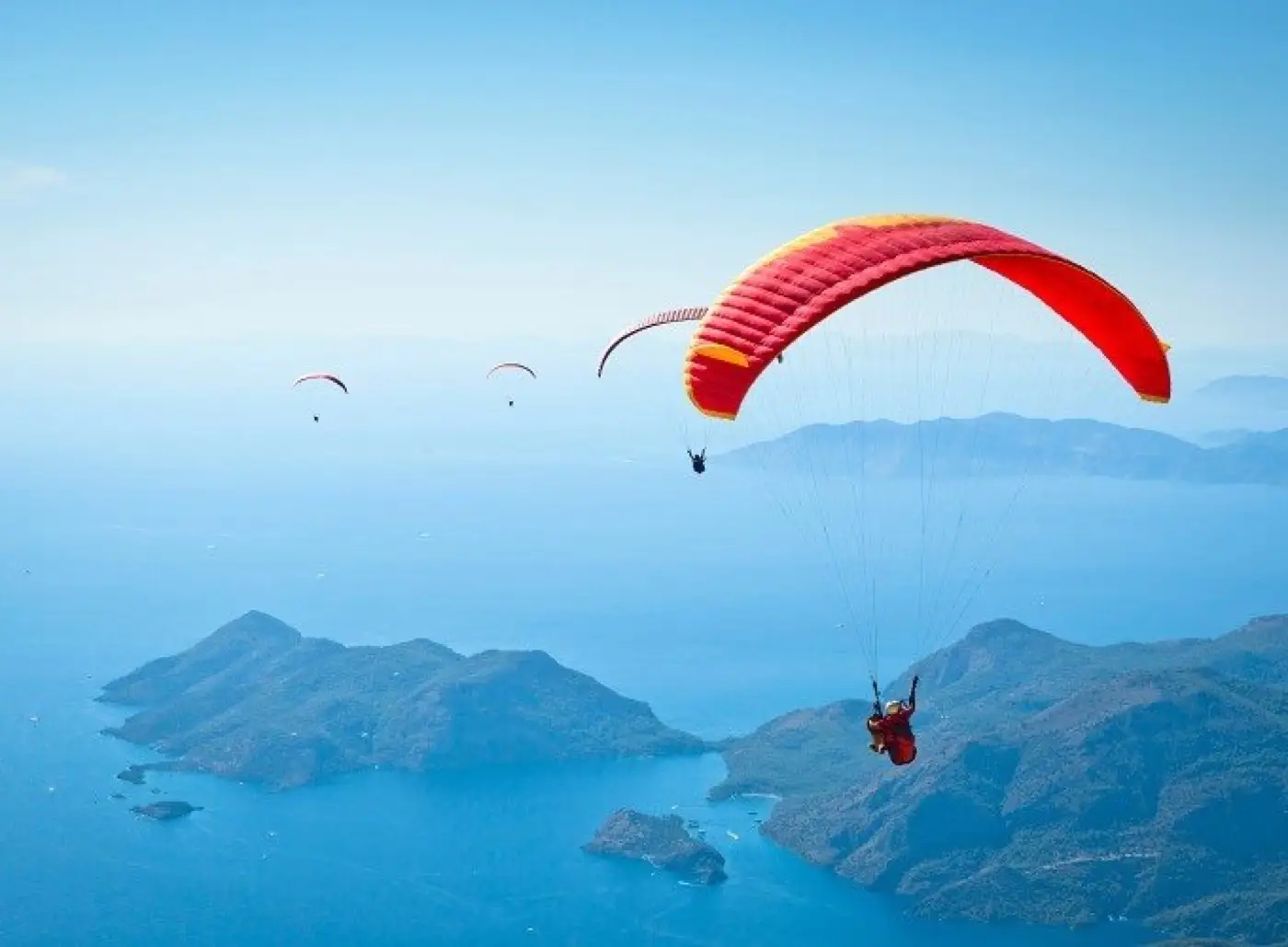
For a view from the air, tandem paragliding flights over Pamukkale are a popular option offered by local operators.
Accessibility
The barefoot path is a sloping, wet and occasionally slippery surface, so it is not suitable for wheelchairs and can be challenging for anyone with limited mobility or balance.
That doesn't mean you have to miss Pamukkale. You can drive up to the plateau gates and see the travertines from the upper edge, where the views are the most impressive anyway. You can dip your feet in the pools near the top without walking the whole slope. Some of the Hierapolis paths near the travertines are relatively level, although the ancient city as a whole involves uneven ground and some climbs, especially up to the theatre and the Martyrium of St Philip.
If anyone in your group has mobility needs, tell us when planning. With a car, we can arrange your day so you reach the best viewpoints with minimal walking.
The thermal pools
There are three different thermal water experiences around Pamukkale, and it helps to know which is which.
The travertine pools
These are the shallow natural basins along the barefoot path. The water is warm, usually ankle- to knee-deep, and you can sit in some of the deeper ones. They are part of the general site.
The Antique Pool
The Antique Pool, sometimes called Cleopatra's Pool, is a thermal pool on the plateau inside Hierapolis. Its bottom is scattered with marble columns and fragments that fell into the spring during a 7th-century earthquake, so you swim over genuine Roman remains in clear, body-warm water. It is managed separately and requires its own ticket. There are changing facilities on site. Go early or late in the day to avoid the busiest hours.
Karahayıt thermal hotels
Karahayıt, about 5 km north, has many hotels with thermal pools and spa facilities fed by its iron-rich springs, which stain the local travertine red. A night here after a day on the travertines is a pleasant way to rest, especially in the cooler months.
How long to spend
Plan at least half a day for the travertines and the main sights of Hierapolis. If you want to swim in the Antique Pool, visit the museum and see sunset, a full afternoon and evening is ideal. Staying overnight in Pamukkale village or Karahayıt means you can also return for sunrise.
Visiting with children
Children usually enjoy the travertines enormously: warm shallow water, splashing and a white landscape unlike anything at home. Hold small children's hands on slippery stretches and pack a change of clothes. The Antique Pool has deep sections, so keep an eye on non-swimmers.
Getting there by car
The travertines are about 3 hours by car from Selçuk and Ephesus, and about 3 to 3.5 hours from Antalya or Fethiye. Many travellers drive via Aphrodisias, about 1.5 hours away. See our main Pamukkale guide for all the routes, and our tips on driving in Turkey for the practical side of the road.
Plan it as a self-drive trip
With your own car, you decide when to arrive at the travertines: at sunrise before the tour buses, or at sunset after they have left. You can also link Pamukkale easily with Ephesus, Aphrodisias and the south coast.
Tell us your dates and how you like to travel, and we will design a personal itinerary with hand-picked hotels, a rental car and support throughout your trip. Our Istanbul, Ephesus and Pamukkale and Istanbul to Fethiye routes are good starting points.