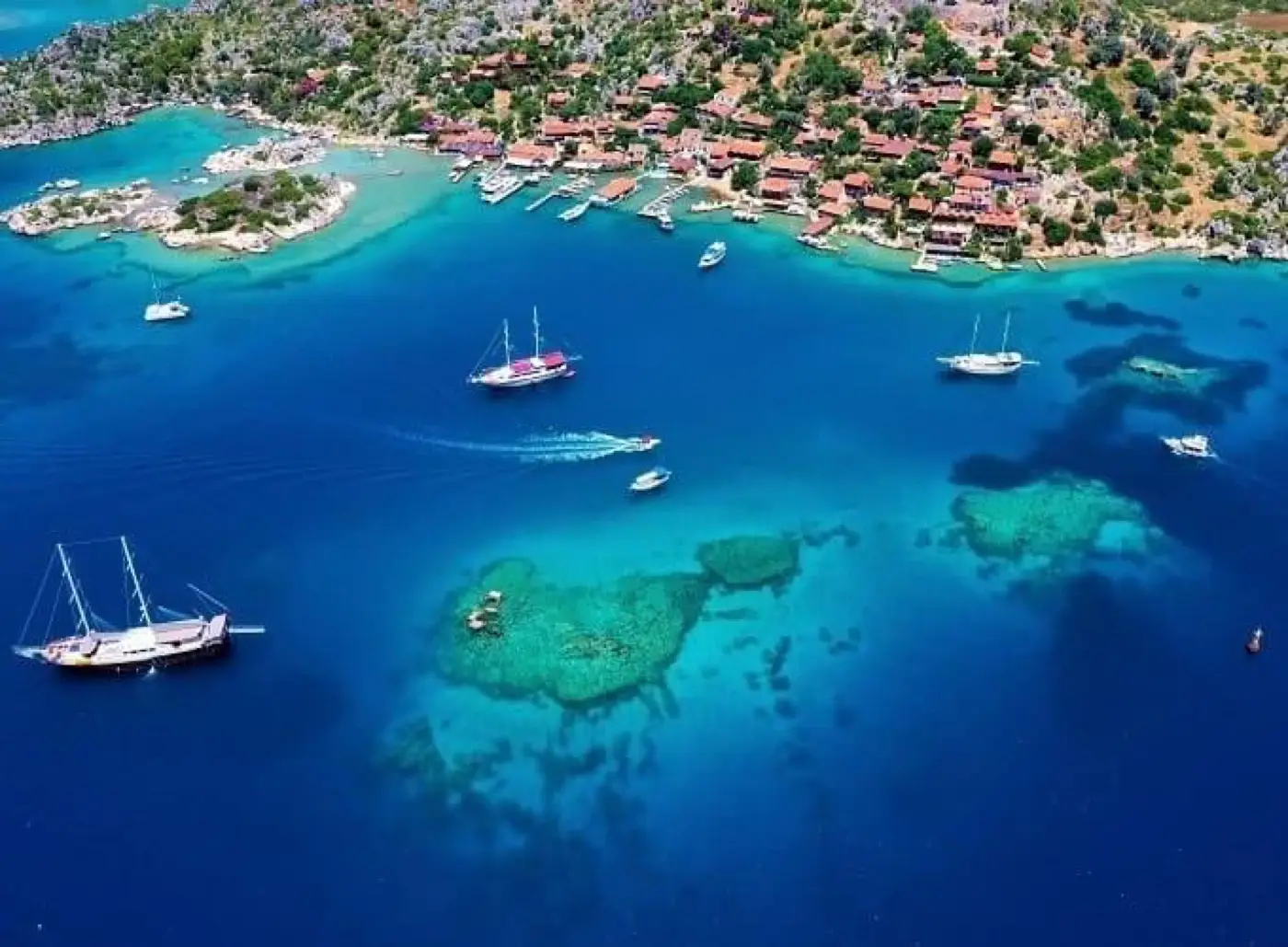
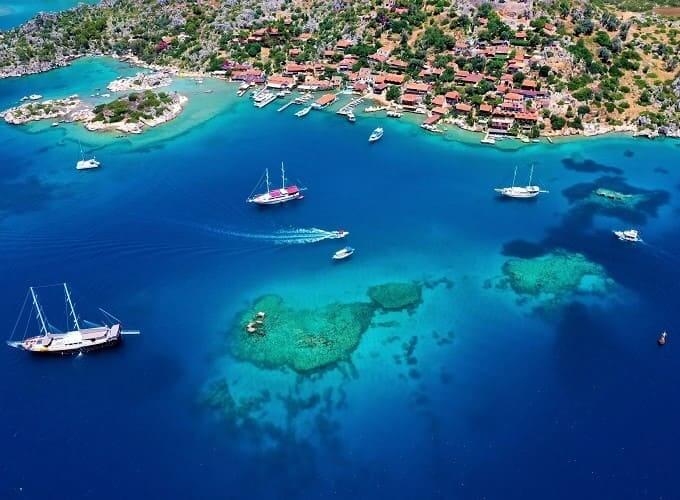
Kekova is a long, uninhabited island off the Lycian coast of south-west Turkey, between Kaş and Demre, famous for the ancient ruins that lie half under the sea along its northern shore. The "sunken city" is the remains of an ancient settlement that dropped below the waterline after earthquakes. Today the island, the bay behind it and the villages of Kaleköy (ancient Simena) and Üçağız form one of the most beautiful corners of the Antalya coast.
Kekova is best seen from the water. A boat or sea-kayak trip glides over foundations, stairways and walls just beneath the surface, then crosses to a castle village that can only be reached by sea or on foot. This guide explains what happened to the sunken city, what you can and cannot do there, and how to fit Kekova into a self-drive route along the coast.
When did the earthquake sink Kekova?
The ruins on Kekova Island were brought down by an earthquake in the 2nd century AD. The town on the island's northern shore is usually identified as Dolichiste (also written Dolikisthe). The earthquake destroyed much of it and caused part of the shoreline to subside, so buildings that once stood at the water's edge ended up partly submerged.
The town did not disappear immediately. Life continued on the island after the earthquake, and the settlement was rebuilt and remained in use into the Byzantine period. It was eventually abandoned, with raids along the coast in the early Middle Ages commonly given as the reason.
The Lycian coast has a long history of earthquakes and of land slowly sinking relative to the sea. That is why you see ancient remains at or below sea level in several places in the area, not only on Kekova itself. Nearby Aperlae and parts of Simena also have ruins in the water.
What can you see at the sunken city?
From a boat you can see walls, house foundations, staircases cut into the rock, and the outline of what were once docks and buildings, running from the shore down into shallow, very clear water. On calm days the stones are easy to make out under the surface. The most photographed spot is a section of stepped foundations descending straight into the sea.
Look out along the shore for an apse-like wall, often linked to a Byzantine church, and for the rock-cut steps that appear to lead nowhere. The water is shallow and the Mediterranean light is strong, so midday can actually be good for seeing details below the surface, even though morning is calmer for paddling.
Why can't you swim over the ruins?
Swimming, snorkelling and diving are not allowed over the sunken city. Kekova was declared a Specially Protected Area in 1990, and the waters directly above the ruins remain off-limits to protect the archaeological remains. Boats may pass slowly above the site, but nobody may get into the water there.
Elsewhere in the Kekova area the rules are more relaxed. Boat tours usually stop at nearby coves where swimming is permitted, and the crews point out the boundaries. Don't pick up anything from the seabed or the shore; removing antiquities is a serious offence in Turkey.
Simena and Kaleköy
Kaleköy, the village on the mainland opposite Kekova Island, stands on the site of ancient Simena. Its name means "castle village", and the castle on the hill above the harbour is its landmark. The walls are generally attributed to the medieval period, built on top of older fortifications, and the climb up through the village rewards you with one of the best views over the Kekova bay.
Inside the castle walls you can see a tiny rock-cut theatre with only a handful of rows, often described as the smallest in Lycia. Below the village, Lycian tombs and sarcophagi stand among the houses and olive trees. One sarcophagus sits in the shallow water near the shore, the scene that appears on countless Kekova postcards.
Kaleköy has no road access for normal traffic. You arrive by boat from Üçağız, a few minutes across the water, or on foot along the coast path. The village has a handful of small guesthouses and waterside restaurants, and in the evening, after the day boats leave, it is wonderfully quiet.
Üçağız: the gateway to Kekova
Üçağız is the small fishing village at the end of the road where most Kekova boat and kayak trips begin. It sits on a sheltered inlet near the ruins of ancient Teimiussa, whose Lycian tombs lie at the edge of the village. You can park here, walk to the harbour and find boats leaving for the sunken city and Kaleköy.
The village also lies on the Lycian Way long-distance walking trail, so you may meet hikers. Staying the night in Üçağız or Kaleköy is a good idea if you want to be on the water early, before the larger day boats arrive from Kaş and Kemer.
Boat tours and kayak tours
There are two main ways to see the sunken city: by boat or by sea kayak.
Boat tours
Boat tours are the easiest way. Small local boats leave from Üçağız for a short trip around the sunken city and Kaleköy, while larger day boats depart from Kaş and from the Andriake harbour near Demre. A typical tour cruises slowly along the ruins, stops at one or two swimming coves, and drops you in Kaleköy for time to climb to the castle. Glass-bottom boats are also available.
A private boat from Üçağız gives you more flexibility: you choose the timing, avoid the crowded midday slot and spend as long as you like in Kaleköy.
Kayak tours
A guided sea-kayak tour is the quietest and most memorable way to see Kekova. Paddling at water level, you drift right along the shoreline ruins in near silence. Tours usually start from Üçağız and run in the morning, when the water is calmer. No previous experience is needed for the standard routes, but you should be comfortable spending a few hours on the water in the sun. Kayaks must also keep to the rules: you can look, but you can't get out and swim over the ruins.
Bring a hat, water, sunscreen and a waterproof bag for your phone or camera.
Myra and the Church of St Nicholas in Demre
Demre, about half an hour east of Üçağız by road, is home to two sights that pair perfectly with Kekova.
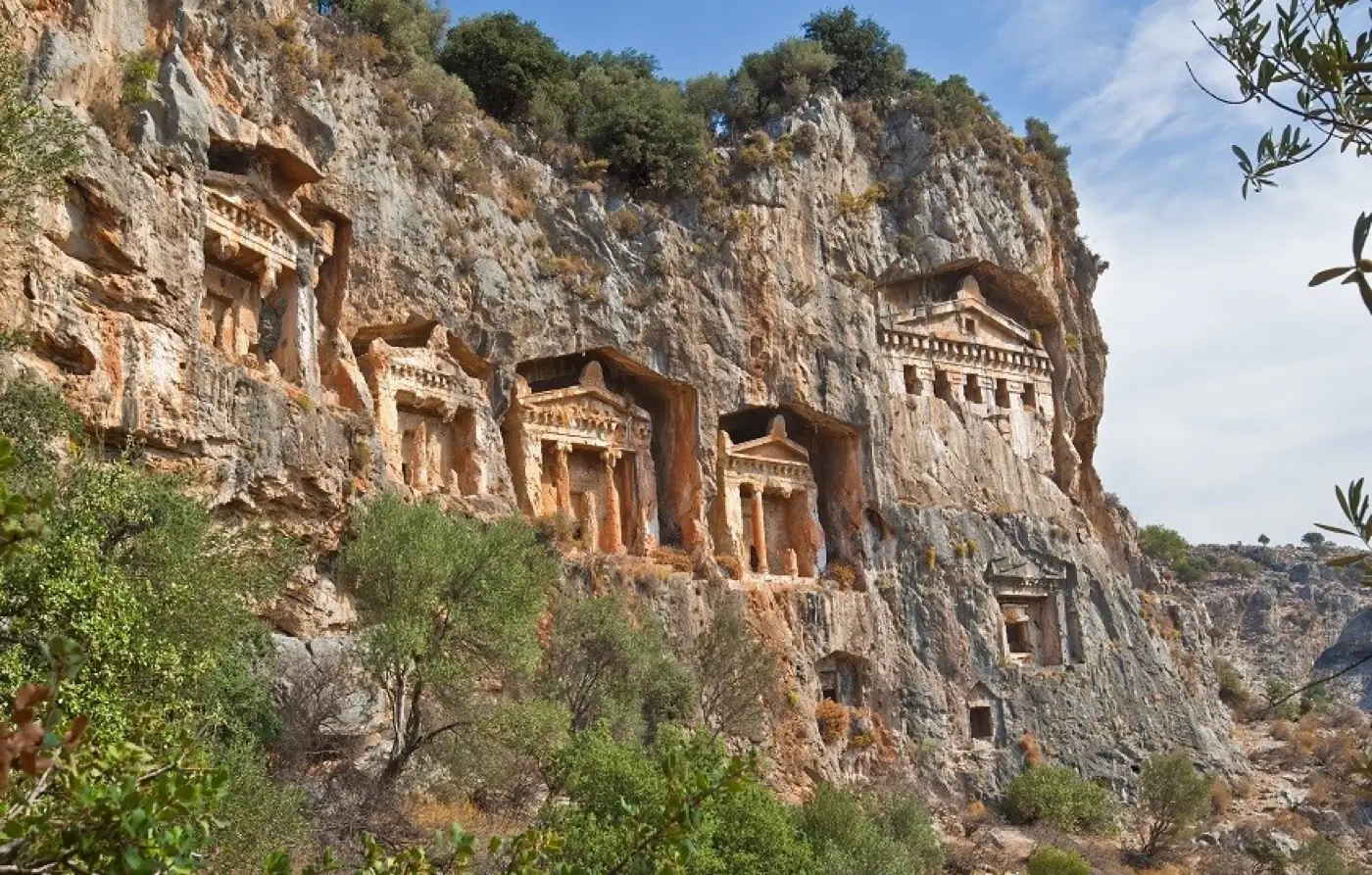
Myra was one of the leading cities of ancient Lycia. Its cliff face is honeycombed with rock-cut tombs carved to look like house fronts, rising above a large Roman theatre with carved masks among the ruins. It is one of the most striking sights on the whole coast.
The Church of St Nicholas in the town centre is associated with Nicholas, the 4th-century bishop of Myra whose legend developed into the figure of Santa Claus. The Byzantine church preserves frescoes, floor mosaics and a sarcophagus traditionally linked to the saint. It draws visitors from around the world, especially Orthodox pilgrims.
Nearby, the ancient harbour of Andriake has a restored Roman granary that houses a museum on Lycian civilisation. Plan a half day for Myra, the church and Andriake, and spend the other half on the water at Kekova.
Driving to Kekova on the D400 coastal road
Kekova is reached by car via the D400, the coastal highway along the Lycian coast, with a short side road down to Üçağız.
- From Kaş: about 45 minutes to an hour. Head east on the D400 towards Demre and turn off for Üçağız. This is the closest and most common base.
- From Demre: about 30 minutes west, then down the side road to Üçağız.
- From Antalya: about 3 hours. The road passes Kemer, Phaselis and Olympos before climbing over the mountains to Finike and Demre.
- From Fethiye: about 3 hours east via Kalkan and Kaş.
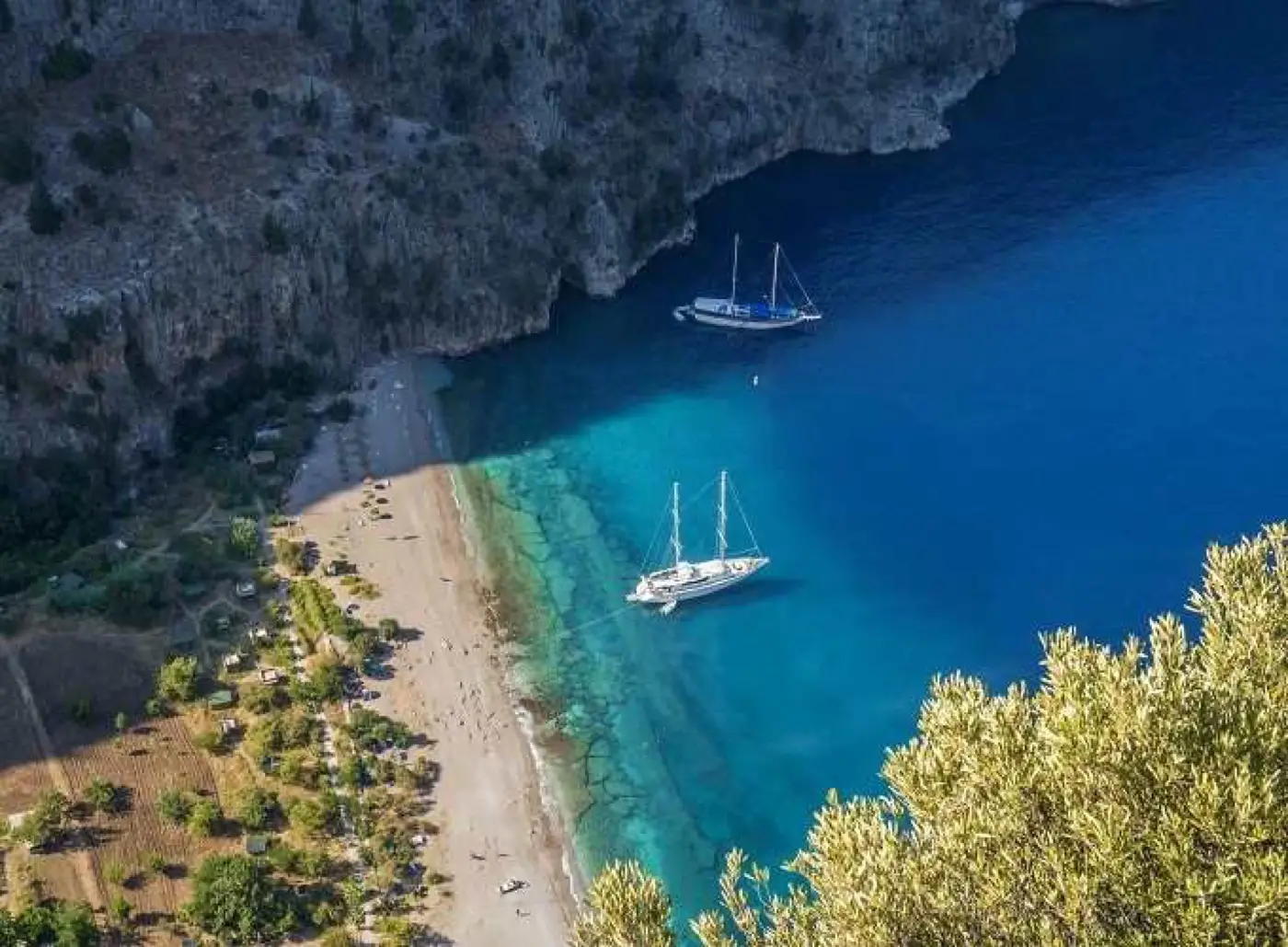
The stretch between Kaş and Kalkan is one of the most beautiful coastal drives in Turkey, with views down to Kaputaş beach. The road is winding in places, so allow extra time and use the many viewpoints. The side road to Üçağız is narrow but paved; drive carefully and watch for oncoming traffic in the bends.
You can't drive to Kaleköy. Leave your car in Üçağız and take a boat across. For broader planning, see our Lycian coast road trip guide and our tips on driving in Turkey.
Kekova on a Lycian coast route
Kekova is one of the highlights of the coast between Antalya and Fethiye. A good self-drive route might include:
- Phaselis, the ancient harbour city in the pines south of Kemer.
- Olympos and the Chimaera flames at Çıralı.
- Myra, St Nicholas and Kekova from a base in Kaş or Üçağız.
- Patara, with its long sandy beach and ancient Lycian capital.
- Ölüdeniz and the Blue Lagoon near Fethiye.
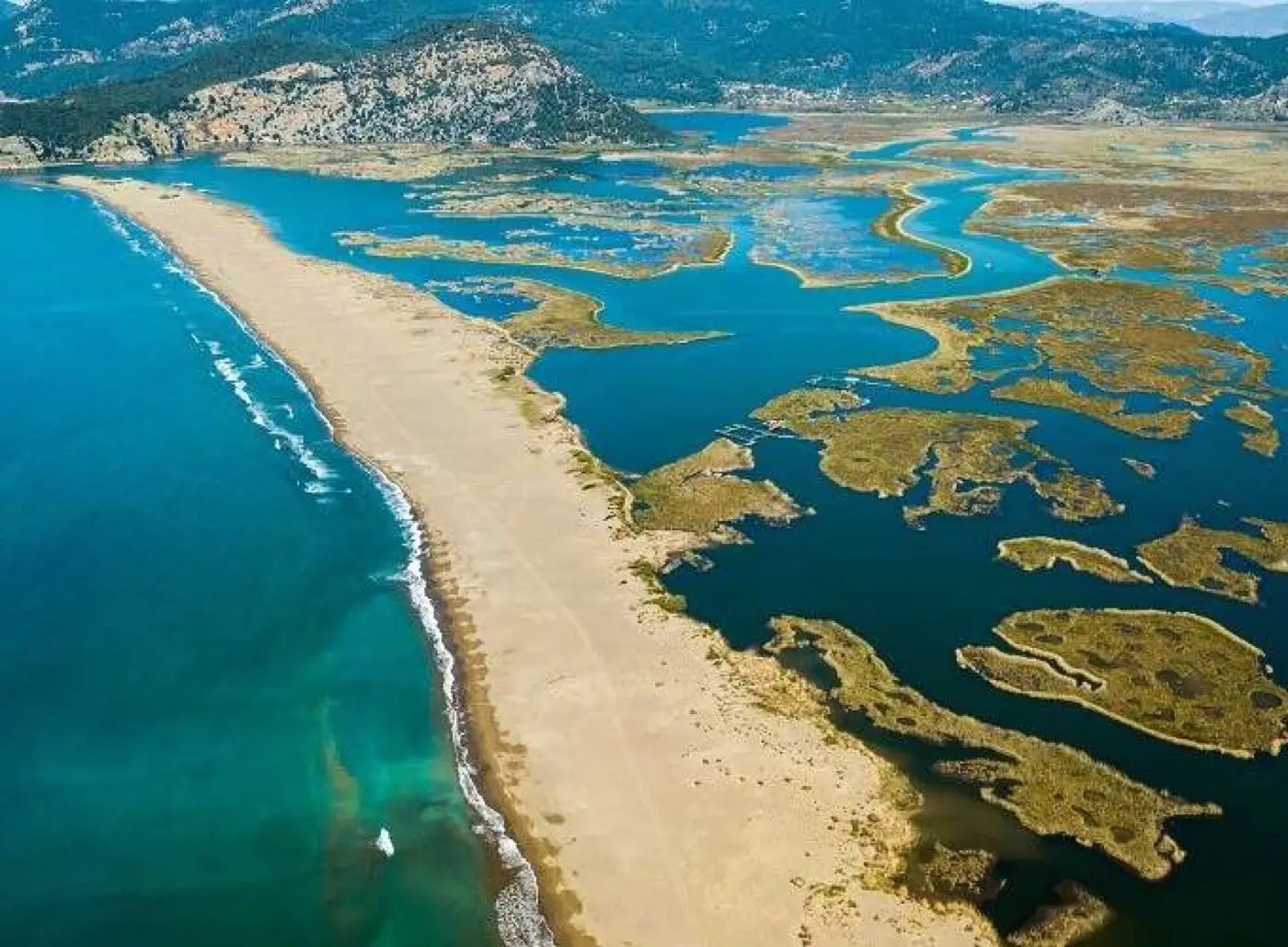
- Dalyan, with its rock tombs and Iztuzu turtle beach.
Our sample routes Antalya to Blue Lagoon and Antalya to Dalyan both include Kekova, and the longer Grand Turkey for Summer brings it together with Istanbul, Cappadocia and the Aegean.
Plan it as a self-drive trip
Kekova rewards travellers who can choose their own timing: an early kayak before the boats arrive, a sunset dinner in Kaleköy, a quiet night in Üçağız. With your own car you can link it with Myra, Kaş and the rest of the Lycian coast at whatever pace suits you.
Tell us your dates and how you like to travel, and we will design a personal itinerary with hand-picked hotels, a rental car and support throughout your trip. We are happy to arrange the boat or kayak day too.