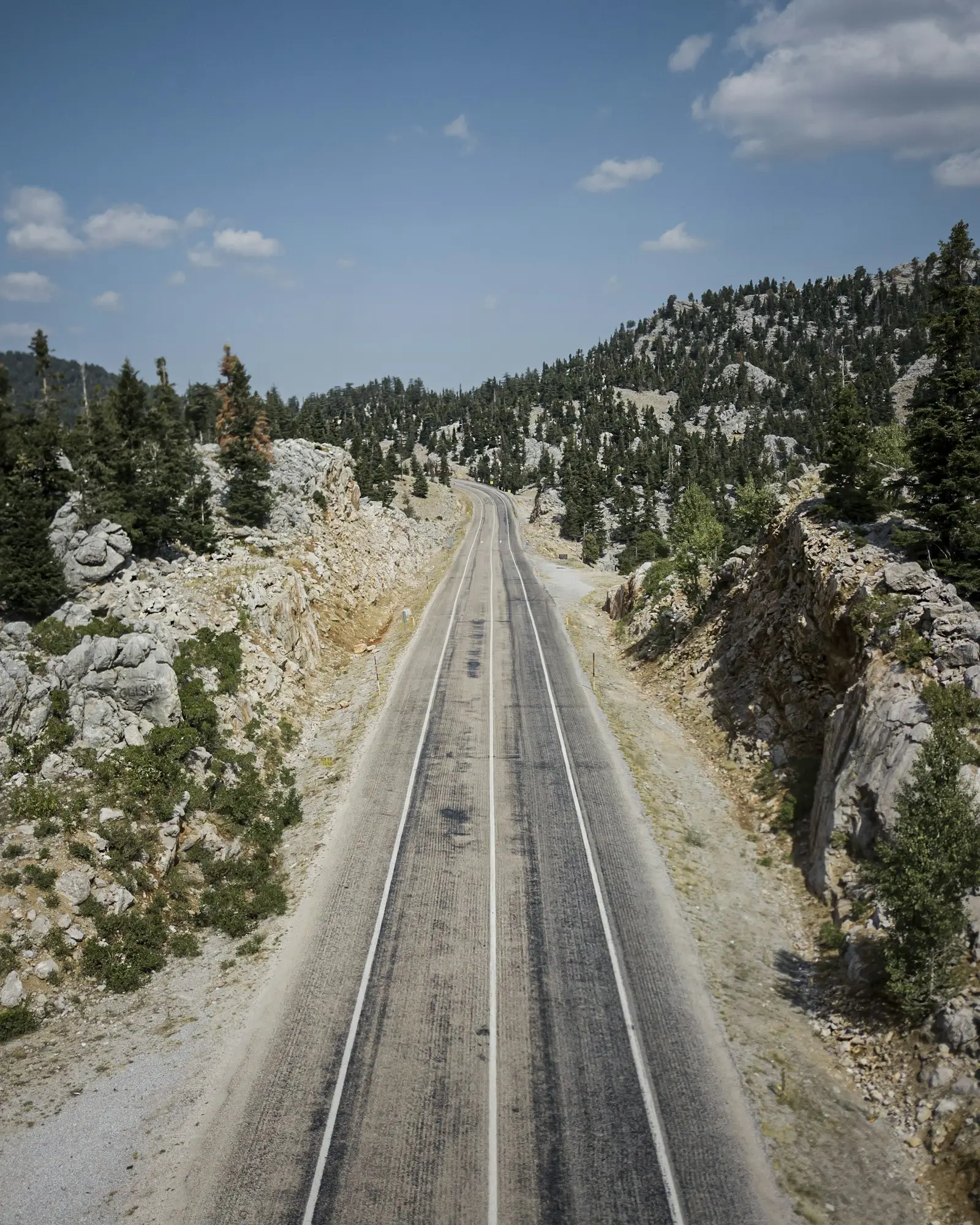
Driving in Turkey as a tourist is straightforward if you know a few rules before you set off. Traffic drives on the right, main roads are generally in good condition, motorway and bridge tolls are paid electronically through an HGS tag (rental cars usually have one), and speed limits are enforced with radar. You need a valid licence and, depending on your nationality, an International Driving Permit. The biggest adjustment for most visitors is the local driving style, which can be assertive, so a calm, defensive approach works best.
This guide explains the rules and practical tips for driving in Turkey, from documents and speed limits to Istanbul traffic, mountain roads and what to do in an emergency. Traffic rules and fines change from time to time, so treat this as a practical overview and always follow road signs and current official guidance.
The basics: driving on the right
Turkey drives on the right and overtakes on the left, as in most of continental Europe. Cars have the steering wheel on the left. At roundabouts, give way as indicated by the signs; in practice, many Turkish roundabouts give priority to vehicles already on the roundabout, but some junctions are signed differently, so watch carefully.
Road signs follow international conventions. Place names appear in Turkish, and brown signs mark museums and archaeological sites. A few useful words:
- Dikkat: caution
- Yavaş: slow
- Çıkış: exit
- Otoyol: motorway
- Şehir merkezi: city centre
- Yol çalışması: roadworks
- Otopark: car park
Licence and International Driving Permit
Tourists can generally drive in Turkey on a valid foreign licence for a limited period after entry. Whether you also need an International Driving Permit (IDP) depends on your country and your licence.
The UK government, for example, currently advises British drivers to carry a 1968 International Driving Permit (or a notarised Turkish translation of their licence) and notes that the older 1949 IDP is no longer accepted. Other governments give their own advice. Rental companies can also have their own rules and may ask for an IDP even when the law does not strictly require one, particularly if your licence is not in the Latin alphabet.
Our advice: check your own government's travel advice and your rental company's terms before you travel. If in doubt, an IDP is inexpensive and easy to get in your home country, and it removes any uncertainty at the rental desk or a police check.
Always carry your passport as well. Police checkpoints are common, and you are expected to show photo ID.
Speed limits in Turkey
Speed limits depend on the type of road and the type of vehicle. For ordinary passenger cars, the general limits set by Turkish traffic regulations are:
- In towns and cities (settlement areas): 50 km/h
- Two-lane intercity roads outside towns: 90 km/h
- Divided highways (dual carriageways): 110 km/h
- Motorways (otoyol): 120 km/h, with higher limits of 130 or 140 km/h signed on certain motorways designed for it
Local signs always take priority. You will often see lower limits near junctions, villages, schools, roadworks and on mountain sections, and some city roads are signed lower than 50 km/h. Limits for vans, vehicles towing trailers and other categories are lower.
Speed limits and their enforcement are reviewed from time to time, and Turkey increased many traffic fines in 2026. Always follow the posted signs and check current rules before you drive.
Radar, cameras and police checks
Speed is enforced with fixed cameras, average-speed sections on some highways, and mobile radar operated by the traffic police and gendarmerie. Radar checks are common on intercity roads, often just outside towns where the limit drops.
Fines are recorded against the vehicle's plate. With a rental car, the fine is passed to the rental company, which will usually charge it to you along with an administration fee, sometimes weeks after your trip.
At police or gendarmerie checkpoints, slow down, follow the officers' signals and stop if asked. Have your passport, licence and the rental documents ready. Officers are generally polite and checks are routine.
Seat belts, children and phones
Seat belts are compulsory for the driver and all passengers, in the front and the back. Children should travel in a suitable child seat for their age and size, and young children should not sit in the front seat. If you need child seats, request them when you book the rental car.
Using a handheld phone while driving is prohibited. Use a phone mount and hands-free system for navigation.
Alcohol limit
Turkey has a legal blood alcohol limit for private car drivers of 0.5 g/L (0.5 promil), and a zero limit for commercial drivers. Penalties include fines and a licence suspension, and they increase for repeat offences. The safest rule is simple: if you drink, do not drive. Breathalyser checks are common, especially at night and during holidays.
Motorway tolls and HGS
Most motorways (otoyol) in Turkey are toll roads, as are several major bridges and tunnels. There are no cash or card booths: tolls are collected electronically at full speed through HGS, a small sticker tag on the windscreen that is read automatically as you pass.
Rental cars in Turkey normally come with an HGS tag. The rental company then charges you the tolls you used, usually after you return the car. When you pick up the car, ask:
- Is the HGS tag active?
- How and when will the tolls be charged?
Do not drive on a toll road without a working tag. Passing a toll point without payment leads to a fine on top of the toll. Toll amounts change regularly, so we do not list them here.
Using non-toll alternatives is often possible, as dual carriageways run parallel to many motorways. They are a little slower but usually free.
Bridges and tunnels you may cross
Several of Turkey's best-known crossings are tolled and fit naturally into a road trip:
- Osmangazi Bridge: a suspension bridge over the Gulf of Izmit, on the motorway between Istanbul and Bursa and Izmir. It saves a long drive around the gulf. A car ferry between Eskihisar and Topçular also crosses the gulf.
- 1915 Çanakkale Bridge: opened in 2022, it spans the Dardanelles between the Gallipoli peninsula and the Lapseki side, near Çanakkale. It is the natural crossing on routes linking Istanbul, Gallipoli and Troy. Car ferries between Eceabat or Kilitbahir and Çanakkale and between Gelibolu and Lapseki remain an alternative.
- Bosphorus crossings in Istanbul: the 15 July Martyrs Bridge (formerly the Bosphorus Bridge), the Fatih Sultan Mehmet Bridge and the Yavuz Sultan Selim Bridge in the north, plus the Eurasia Tunnel under the Bosphorus for cars. Not every crossing is tolled in both directions, and some are restricted for certain vehicles, so let your navigation app guide you.
Fuel stations
Fuel stations are frequent on main roads and in towns. Most are full-service: an attendant fills the tank, and you pay at the pump or inside by card or cash. Many stations have clean toilets, a small market and a café, making them good rest stops.
Check your rental car's fuel type before the first fill. In Turkish, petrol is benzin and diesel is dizel or motorin. Tell the attendant "full" (full or depo dolu) or the amount you want.
On remote mountain roads, the Datça and Bozburun peninsulas and parts of Central Anatolia, stations are further apart. Refill when the tank is half empty.
Parking
In small towns and at archaeological sites, parking is usually easy, and major sites such as Ephesus and Pamukkale have their own car parks. In cities and busy resorts:
- Use official car parks (otopark), either open-air lots with an attendant or multi-storey buildings.
- In some towns, kerbside spaces are managed by attendants or by payment machines and apps. Look for signs and ask if unsure.
- Do not park where kerbs are painted red and white, in front of garages, at bus stops or where signs show a tow-away zone.
- Keep valuables out of sight.
When choosing hotels, ask whether they have parking. This matters especially in old towns with narrow lanes, such as Şirince, Safranbolu or the old quarter of Kaş.
City driving in Istanbul
Istanbul is a wonderful city to explore, but it is not a city where you want a car. Traffic is heavy for much of the day, the old city's streets are narrow and steep, parking is limited, and lane discipline can be loose. Public transport, ferries, taxis and walking are far easier.
On a self-drive trip, we usually suggest spending your Istanbul days without a car and collecting it when you leave the city, often at the airport or on the outskirts. Leave early in the morning to avoid rush hour, and let a navigation app choose the bridge or tunnel. Weekday evening rush hours and the start and end of public holidays are the worst times to drive.
Other large cities, such as Ankara, Izmir and Antalya, are busy but easier. Their ring roads make it possible to bypass the centre.
Mountain and coastal roads
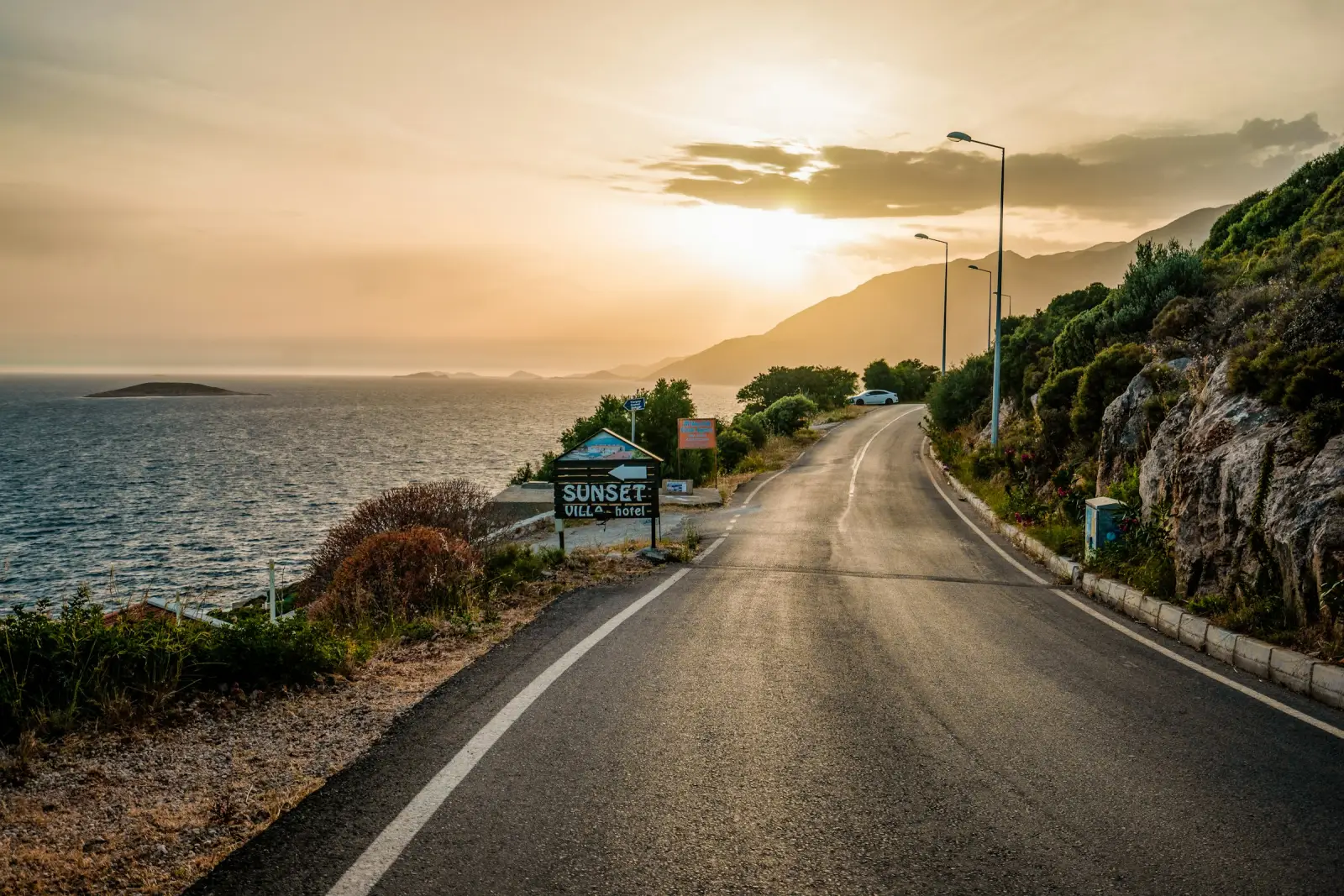
Some of Turkey's most beautiful drives are on winding roads: the D400 along the Lycian coast past Kekova and Kaş, the roads over the Taurus mountains between Central Anatolia and the Mediterranean, and the twisting routes on the Bozburun and Datça peninsulas. A few tips:
- Allow extra time. Distances look short on the map, but average speeds can be low.
- Use a lower gear on long descents to avoid overheating the brakes.
- Expect slow trucks on climbs and be patient before overtaking. Only overtake where you can clearly see the road ahead.
- Watch for falling rocks, gravel on bends and animals on the road.
- In winter, high passes and the Cappadocia region can see snow and ice. Ask the rental company about winter tyres or chains if you plan to drive inland between December and March, and check the weather before setting off.
Our Lycian coast road trip guide covers one of the finest coastal drives in detail.
Night driving
Try to arrive before dark, especially on rural and mountain roads. At night you may meet unlit vehicles, tractors, livestock, pedestrians on the roadside and potholes that are hard to see. Oncoming drivers do not always dip their headlights. On motorways night driving is easier, but fatigue is still a risk after a long day of sightseeing.
During Ramadan, driving can be more erratic around sunset, when people hurry home to break the fast. Take extra care at that time of day.
Emergencies: call 112
Turkey's emergency number is 112, for police, ambulance and fire services. Save it in your phone, along with your rental company's 24-hour assistance number and, if you travel with us, the Road Trip Turkey support line.
If you break down, move the car off the road if possible, switch on your hazard lights, put on a reflective vest if one is supplied and place the warning triangle well behind the car. Then call the rental company's roadside assistance.
What to do after an accident
Procedures can vary, so follow the instructions of the police and your rental company. In general:
- Stop safely, switch on your hazard lights and place the warning triangle.
- Check for injuries and call 112 if anyone is hurt or if the situation is unsafe.
- Do not move the vehicles if someone is injured, unless they are causing further danger.
- Call your rental company straight away. Rental insurance claims usually require an official report, such as a police report or an accident report form signed by both parties, and often an alcohol test. Ask the rental company exactly which documents they need.
- Take photos of the scene, the vehicles, the plates and any damage, and note the other driver's details.
- Do not sign anything you do not understand. Ask the rental company or your trip support team for help with translation.
If you are on a self-drive trip with Road Trip Turkey, call our 24/7 support line as well. We can help you communicate with the rental company and adjust the rest of your plans.
Practical tips for a smooth drive
- Navigation: Google Maps and other common apps work well in Turkey. Download offline maps in case of weak signal in the mountains.
- Mobile data: a local SIM or eSIM makes navigation and calls easier.
- Daily distances: keep most days under four or five hours of driving, and build in stops.
- Cash: carry some cash for small car parks, village cafés and markets.
- Rest: service areas on motorways and fuel stations on main roads are good places for a coffee break.
For licence, insurance and rental questions, see renting a car in Turkey. For the big picture, read our self-drive Turkey guide.
Plan it as a self-drive trip
Knowing the rules is the first step. The second is a route that keeps the driving enjoyable: realistic distances, hotels with parking and the right roads for the season. That is what we design for every traveller.
Tell us when you are travelling and what you would like to see, and we will propose a personal self-drive itinerary with the hotels and rental car arranged, plus 24/7 support while you are on the road. Ask us for your itinerary and we will send you a first proposal.