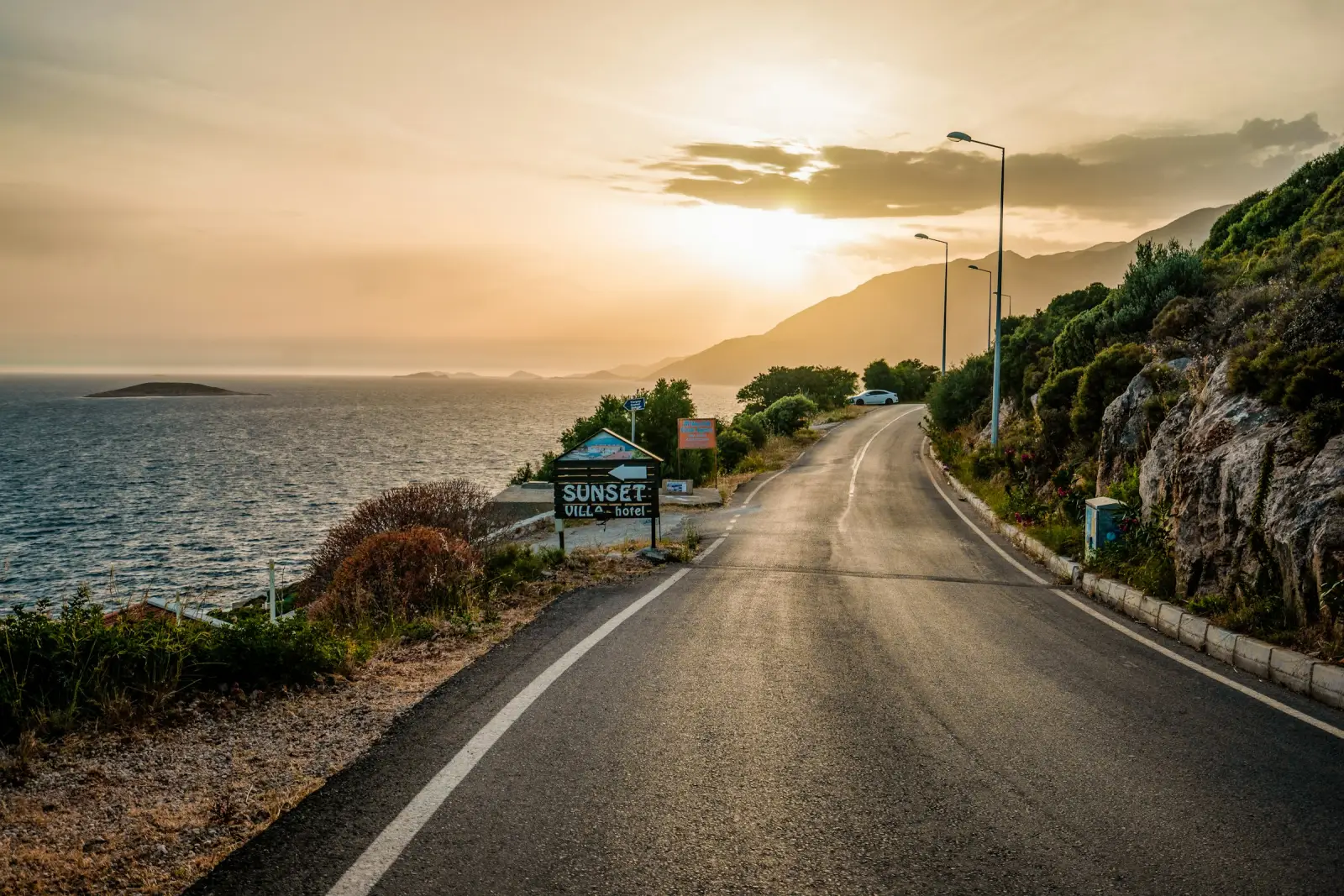
A self-drive trip is one of the best ways to see Turkey. The country is large, its highlights are spread out, and many of the most memorable places (a quiet Lycian cove, a hilltop Greek theatre, a village above the Cappadocian valleys) sit between the stops that coach tours use. With your own car you set the pace: you leave when the light is good, stay longer where you are happy and skip what does not interest you. Main roads are generally in good condition, fuel stations are frequent, and the distances between classic sights are manageable if the route is well planned.
This guide covers everything you need to plan a self-drive trip in Turkey, from choosing a region and a route shape to rental cars, tolls, documents, seasons and safety.
Why choose a self-drive trip in Turkey?
Turkey rewards independent travel. Many of its great ancient sites, such as Ephesus, Pergamon, Aphrodisias and Troy, lie a short drive from small towns where you can stay in family-run hotels. Bus tours tend to visit them in a rush at the busiest hours. With a car you can arrive early, beat the heat and the crowds, and continue to a beach or a village for lunch.
A self-drive trip also lets you link very different landscapes in one journey. In two weeks you can walk Istanbul's old city, cross the Dardanelles, follow the Aegean coast, climb the white travertines of Pamukkale and end on the turquoise water of the Lycian coast. Every day looks different.
Finally, it is flexible. If the weather turns, you change the order of your days. If you fall in love with a place, you can stay another night. That freedom is the whole point of a road trip in Turkey.
Who a self-drive trip suits
Self-drive works well for couples, families and small groups of friends who are comfortable driving on the right and who like to travel at their own pace. It suits curious travellers who want history, food, nature and beaches in one trip. If you prefer never to drive in a big city, that is easy to arrange: most routes pick up the car at an airport or on the edge of Istanbul rather than in the centre.
The main regions for a road trip in Turkey
Turkey is roughly 1,600 km from west to east, so no single trip covers everything. Most first-time road trips focus on the western half, where the classic sights are concentrated. Here are the regions that matter most.
Marmara: Istanbul, Gallipoli and the Dardanelles
Most journeys start in Istanbul, where you can spend a few days on foot visiting Hagia Sophia and Topkapı Palace before collecting the car. Heading south-west, the road reaches the Gallipoli peninsula and the Dardanelles. Gallipoli holds the memorials of the 1915 campaign, and the 1915 Çanakkale Bridge now links the peninsula with the Asian shore near Lapseki. Just south of Çanakkale lies Troy, a natural first stop on any Aegean route.
Further east, Bursa and the Ottoman village of Cumalıkızık make a good detour on the way to the interior.
The Aegean coast
The Aegean is the heart of classical Turkey. Driving south from the Dardanelles you pass Assos and the Kaz Dağları (Mount Ida) foothills, the olive-oil town of Ayvalık, the Hellenistic acropolis of Pergamon above Bergama, then Izmir and the area around Selçuk, with Ephesus, the hillside village of Şirince and the House of the Virgin Mary. Inland, the Meander valley leads to Aphrodisias and Pamukkale with the ruins of Hierapolis.
Further south, Bodrum, the Datça and Bozburun peninsulas and the quiet bay of Akyaka mark the transition to the Mediterranean.
The Lycian coast
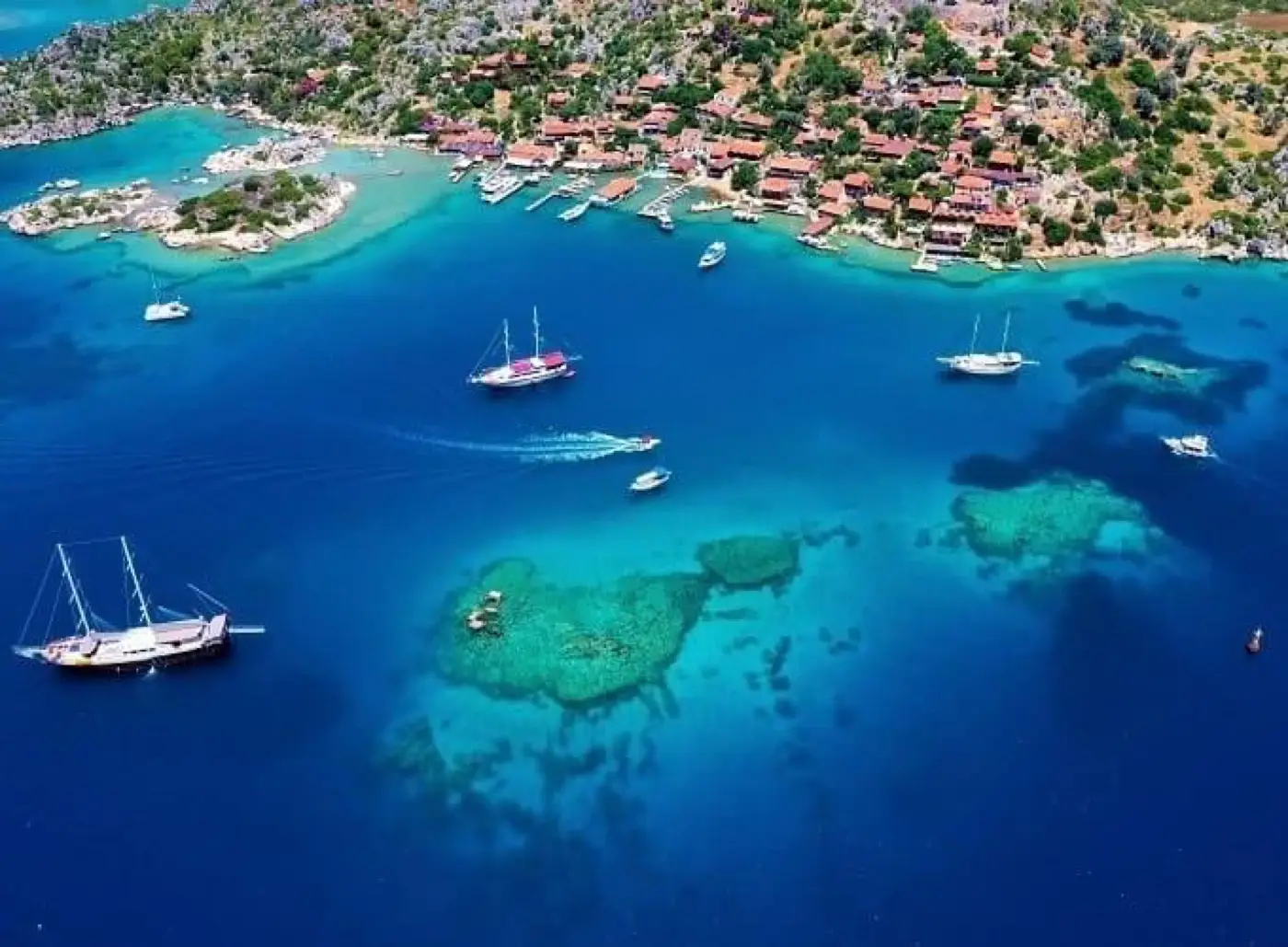
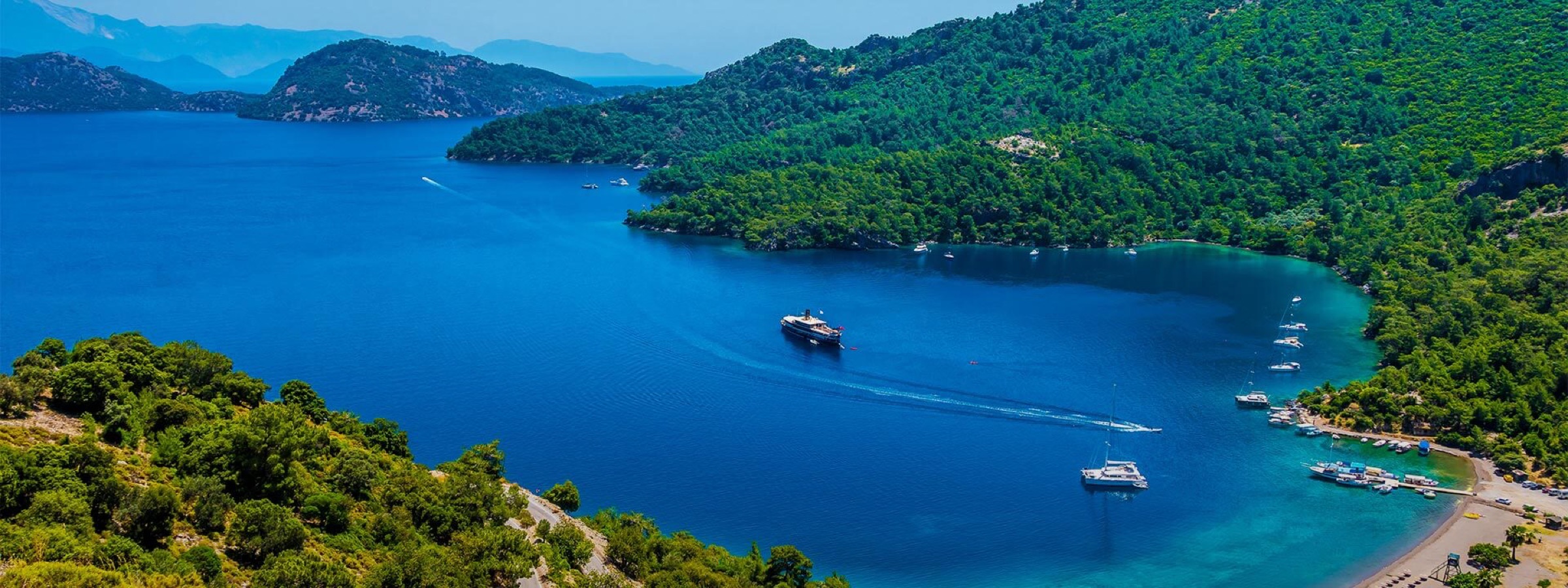
Between Dalaman and Antalya the mountains drop straight into the sea. This is the Turkish coast many people picture: the river delta and rock tombs of Dalyan, the beach at Ölüdeniz and the Blue Lagoon, the long sands of Patara, the harbour towns of Kaş and Kalkan, the sunken ruins of Kekova, and the Roman port of Phaselis under pine forests near Antalya. The coastal D400 road is one of the most scenic drives in the country. Read more in our Lycian coast road trip guide.
Antalya and the eastern Mediterranean
East of Antalya the coastal plain opens up. The theatre at Aspendos, the ruins of Perge and Side's temple by the sea are all within easy reach, and Alanya sits further east under its castle. Antalya's airport makes this region an easy start or end point for a one-way trip.
Cappadocia and Central Anatolia
Cappadocia is the great inland highlight: fairy chimneys, painted rock churches, underground cities and, at dawn, the hot-air balloons. Göreme, Uçhisar and Ürgüp are the usual bases, and distances between valleys are short. See what to do in Cappadocia and our guide to the Cappadocia hot-air balloon tour.
On the way there or back you can stop at Ankara, the Hittite capital Hattusa, the Salt Lake (Tuz Gölü) or Konya and the Seljuk caravanserais of the old Silk Road. Our guide to driving Istanbul to Cappadocia by car covers the options.
The Black Sea
The western Black Sea is a greener, cooler Turkey. Safranbolu, a UNESCO-listed Ottoman town, is a classic stop between Istanbul and Cappadocia, and the small harbour town of Amasra is a short drive north. The forests around Abant Lake and the Yedigöller (Seven Lakes) valley are lovely in spring and autumn. The eastern Black Sea, with its tea gardens and high plateaus, is spectacular but far from the classic western circuit, so it usually needs a dedicated trip.
Route shapes: loop, one-way or drop-off?
Once you know which regions you want, the next decision is the shape of the route. This affects your flights, your car rental and how much driving you do.
Loop routes
A loop starts and ends in the same place, usually Istanbul or Antalya. It keeps car rental simple, because you return the car where you picked it up, and lets you book a round-trip flight. The downside is that you may drive part of the way back through areas you have already seen, which takes time. Loops work well for Cappadocia circuits and for longer "Grand Turkey" trips, such as our Grand Turkey for summer and Grand Turkey for non-summer route ideas.
One-way routes
A one-way trip starts in one city and ends in another, for example Istanbul to Fethiye or Istanbul to Antalya. You spend every day moving into new landscapes and fly home from the end point. Turkey's domestic flight network makes this very practical: you can fly into Istanbul and out of Dalaman, Antalya or Izmir, or take a short domestic flight back to Istanbul for your international connection.
Popular one-way ideas include Istanbul to Fethiye, Istanbul to Dalyan and Istanbul, Cappadocia and Antalya via Safranbolu.
One-way car hire and drop-off
Rental companies in Turkey generally allow you to return the car in a different city, but they usually charge a one-way drop-off fee and availability varies by location. This is one of the details worth arranging before you travel. Read more in renting a car in Turkey.
Combining a flight and a drive
On longer trips it can make sense to fly one leg. A common example is driving Istanbul to Cappadocia, then flying from Kayseri or Nevşehir back west. Another is starting the car only in Antalya after a few days in Istanbul. Mixing flights and driving saves long transfer days without giving up the freedom of a car where it matters.
How long do you need for a road trip in Turkey?
The honest answer: longer than you think. Turkey is big, and the best days are the ones with short drives and plenty of time at each stop.
- 5 to 7 days: one region, done well. Examples: the Lycian coast from Antalya to Dalyan (Antalya to Dalyan), a Cappadocia circuit, or the Aegean from Istanbul to Izmir (Istanbul to Izmir).
- 8 to 12 days: two regions. Istanbul plus the Aegean and Pamukkale (Istanbul, Ephesus and Pamukkale), or Istanbul, Cappadocia and Antalya.
- 14 days or more: a grand loop that links Istanbul, the Aegean, Pamukkale, the coast and Cappadocia.
As a rule of thumb, plan two nights in most places and three in Cappadocia or a beach base. Try to keep most driving days under four or five hours, with a sight or a lunch stop in the middle. Our Turkey road trip itinerary guide shows how this works day by day, and the 10 best road trips in Turkey gives route ideas of every length.
Approximate drive times
Times depend on traffic, roadworks and stops, but these give a sense of scale on main roads:
- Istanbul to Çanakkale: around 4 to 5 hours
- Çanakkale to Selçuk (Ephesus): around 5 to 6 hours, often split with a night near Pergamon or Ayvalık
- Selçuk to Pamukkale: around 3 hours
- Pamukkale to Fethiye: around 3 to 4 hours
- Fethiye to Antalya along the coast: around 4 to 5 hours without stops, but plan a full day or more
- Istanbul to Cappadocia: around 8 to 10 hours, usually split over two days
- Cappadocia to Antalya: around 7 to 8 hours
For more detail on specific legs, see Istanbul to Fethiye by car and Istanbul to Izmir by car.
When to go on a self-drive trip in Turkey
Spring (April to early June) and autumn (September to early November) are the best seasons for most road trips. Temperatures are pleasant for walking around ruins, the sea is warm by late spring and stays warm into autumn, and roads and sites are calmer than in high summer.
Summer is ideal for beaches and the Black Sea, but inland sites such as Ephesus and Pamukkale can be very hot in the middle of the day, so plan early starts. Winter is quiet and atmospheric in Istanbul and Cappadocia, where snow on the fairy chimneys is beautiful, but mountain passes can be icy and many coastal hotels close.
Turkish public and religious holidays also matter. Kurban Bayramı and Ramazan Bayramı follow the lunar calendar, so their dates shift by about 11 days each year. Roads and coastal resorts are much busier during these holidays. Our full guide to the best time for a road trip in Turkey covers each region month by month.
Roads and driving culture
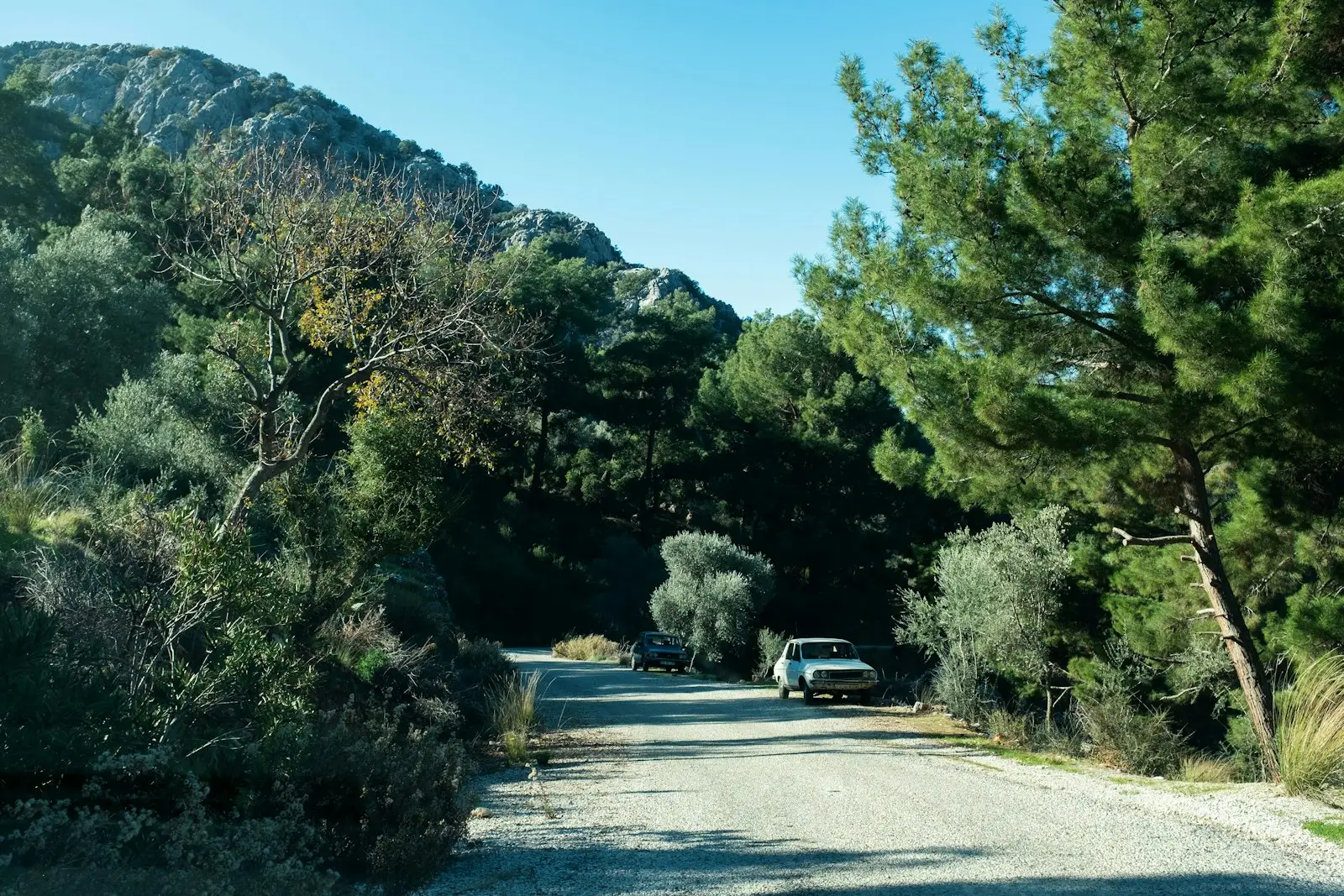
Turkey drives on the right. The main intercity network is good: motorways (otoyol) link Istanbul with Ankara, Izmir, Bursa and Çanakkale, and much of the rest of the country is connected by dual carriageways (bölünmüş yol). Secondary roads are narrower and can be winding, especially along the Lycian coast and in the mountains, but they are usually paved.
Driving style in Turkey can be more assertive than you are used to. Expect overtaking on two-lane roads, tailgating on motorways and creative use of lanes in cities. The best approach is calm and defensive: keep your distance, use your mirrors and do not feel pressured to go faster than you are comfortable with.
In rural areas, watch out for tractors, animals, pedestrians and slow vehicles, especially at dusk. Police and gendarmerie checkpoints are common; slow down, follow instructions and keep your documents to hand.
Speed limits vary by road type and are enforced with fixed and mobile radar. Limits and fines change from time to time, so always follow the signs. Our guide to driving in Turkey covers rules, speed limits and road etiquette in detail.
Tolls, bridges and HGS
Most motorways and several major bridges in Turkey are toll roads. There are no cash booths: tolls are collected electronically through HGS, a sticker tag on the windscreen. Rental cars usually come with an HGS tag, and the rental company charges you for the tolls you used after the rental. Confirm this when you collect the car.
Major tolled crossings you may use include the Osmangazi Bridge over the Gulf of Izmit (on the Istanbul to Izmir motorway), the 1915 Çanakkale Bridge across the Dardanelles, and the Bosphorus bridges and Eurasia Tunnel in Istanbul. Toll amounts change regularly, so we do not list them here.
Fuel and parking
Fuel stations are plentiful along main roads and most are staffed: an attendant fills the car for you, and you pay by card or cash at the counter or at the pump. Check whether your rental car takes petrol (benzin) or diesel (dizel or motorin) before the first fill. In remote mountain areas and on some peninsulas stations are less frequent, so refill when you have the chance.
Parking is easy in most small towns and at major sites, which usually have their own car parks. In cities, use paid car parks (otopark) rather than kerbside parking, and choose hotels with parking where possible. In Istanbul, it is often simplest not to have the car at all while you explore the old city.
Rental car basics
You will need a valid driving licence, a credit card in the main driver's name for the deposit, and your passport. Minimum age and licence-holding rules vary by rental company and car category. Most rental cars in Turkey have manual gearboxes, so request an automatic early if you need one. Basic insurance usually comes with excess (a deductible), and extra cover for tyres, glass and theft is often sold separately.
Pick up the car at an airport or a city office, inspect it carefully, photograph any damage and check the HGS tag and spare tyre. All of this is explained in renting a car in Turkey: what to know.
Documents you should carry
Keep these in the car at all times:
- Your passport (police checkpoints are common and photo ID is required)
- Your driving licence, and an International Driving Permit if your licence requires one
- The rental agreement and the car's registration and insurance documents, which the rental company provides
Rules on foreign licences and International Driving Permits depend on your nationality and change from time to time. Some governments, including the UK, currently advise carrying a 1968 International Driving Permit in Turkey. Check the latest advice from your own government and your rental company before you travel.
Safety on a road trip in Turkey
Turkey is a popular and welcoming destination for independent travellers, and driving the western regions is straightforward for confident drivers. Most of the risk comes from traffic itself. A few habits make a big difference:
- Avoid long drives at night, especially on mountain and rural roads.
- Do not plan more driving in a day than you need. Fatigue is the real danger.
- Wear seat belts in the front and back, and never drink and drive.
- Keep valuables out of sight in parked cars.
- Save the emergency number 112, which connects to police, ambulance and fire services.
Before you travel, check your government's travel advice for Turkey, which is updated regularly.
Where to stay on a self-drive trip
Accommodation is one of the pleasures of a road trip in Turkey, because you can choose a different style in each region:
- Boutique hotels in historic towns: restored stone houses in Şirince or Alaçatı, timber-framed mansions in Safranbolu, old Greek houses in Ayvalık.
- Cave hotels in Cappadocia: rooms carved into the soft rock, often with terraces facing the balloon flights.
- Small seaside hotels and pensions: family-run places in Kaş, Kalkan, Dalyan or Datça, often with breakfast from their own garden.
- City hotels: in Istanbul, staying in Sultanahmet, Karaköy or Beyoğlu keeps you close to the sights.
- Resorts: in Antalya, Side or Bodrum if you want a few days of rest at the end of the drive.
Hotels with parking matter more than you might think, especially in old towns with narrow lanes. On a self-drive trip, it pays to choose hotels that are easy to reach by car and that fit the rhythm of your driving days.
How a tailor-made self-drive trip with Road Trip Turkey works
Road Trip Turkey designs self-drive trips in Turkey around each traveller. There is no fixed package: every trip is personal. Our route ideas, such as Antalya to the Blue Lagoon or Istanbul, Cappadocia and Antalya via Ankara, are starting points that we adapt to you.
1. Plan
You tell us when you want to travel, how many days you have, who is coming, and what you love: history, food, beaches, hiking, quiet villages or a mix. We suggest a route that fits your time and your style, with realistic driving days.
2. Customize
You review the plan and we refine it together. Add a night in Cappadocia, swap a beach town, drop a museum, include a balloon flight or a boat day at Kekova. We adjust until the trip feels like yours.
3. Bookings
We arrange the hotels along the route and the rental car, including pick-up and drop-off points that match your flights. You receive a clear day-by-day itinerary with directions, driving times and suggestions for each stop.
4. Drive
You set off at your own pace. The plan gives you structure, but the days are yours: stop for a swim, linger over lunch or take a detour you spot on the way.
5. 24/7 support
If something comes up on the road, from a flat tyre to a change of plan, our team is available around the clock to help.
6. Feedback
After the trip we would love to hear what worked and what you would change. Your feedback helps us design better routes for future travellers.
Plan it as a self-drive trip
The best road trip in Turkey is the one built around your interests, your season and your pace. Tell us roughly when you are travelling and what you would like to see, and we will propose a personal self-drive itinerary with hotels and a rental car arranged for you.
You can start from one of our route ideas or from a blank page. Either way, the plan is yours to change until it feels right. Ask us for your personal itinerary and we will get back to you with a first proposal.