Istanbul to Fethiye is roughly 770–800 km by car, and the fastest motorway route takes about 8–10 hours of driving depending on traffic and stops. You can do it in one very long day, but the real reward is the slow version: a week or more down the Aegean coast past Troy, Pergamon, Ephesus and Pamukkale, ending at the Blue Lagoon of Ölüdeniz.
This guide compares both approaches, with the main stops, approximate driving times and what to do once you reach Fethiye.
Quick facts
- Distance: about 770–800 km on the fastest route; around 1,000–1,100 km on the Aegean route with its detours
- Approximate drive time: 8–10 hours non-stop on motorways; the Aegean route is best spread over 6–10 days
- Recommended days: 2 days minimum for the drive; 7–10 days to see the Aegean properly
- Best season: April to June and September to October; July and August are hot inland and busy on the coast
- Ends near: Dalaman Airport, roughly an hour from Fethiye, convenient for flying home
One day or several?
The one-day drive suits travellers who have already seen the Aegean or who want to reach the Lycian coast quickly. It is long but straightforward, mostly on motorways and dual carriageways. Expect a full day behind the wheel and an arrival around dusk if you leave Istanbul in the morning.
The two-day drive is a sensible compromise: break the journey around İzmir or Selçuk, which also gives you a morning at Ephesus.
The multi-day Aegean route is one of the best road trips in Turkey. You pass four UNESCO World Heritage Sites in sequence, and none of the daily drives is long. This is the route behind our Istanbul to Fethiye route idea.
The faster route: motorways via Bursa and İzmir
The quickest way south leaves Istanbul across the Gulf of İzmit on the Osmangazi Bridge and follows the Istanbul–İzmir Motorway (O-5) past Bursa and Balıkesir towards İzmir. From the İzmir area, fast roads continue south through Aydın and into Muğla province, then down to the coast at Fethiye.
Some navigation apps may suggest an inland alternative depending on traffic. Either way, the motorways and several of the bridges are tolled. Payment is electronic through the HGS system, normally fitted to rental cars and settled through the rental company; see renting a car in Turkey.
Good places to break the drive:
- Bursa, the first Ottoman capital, with its Green Mosque and covered markets, and the old village of Cumalıkızık nearby.
- İzmir, Turkey's third-largest city, with its seafront Kordon promenade.
- Selçuk, for Ephesus, or the hill village of Şirince above it.
- Pamukkale, if you prefer to cut inland from the Aydın area.
Leave Istanbul early to avoid the worst of the city traffic, which is the most unpredictable part of the day. Our driving in Turkey guide covers speed limits, cameras and service areas.
The classic Aegean route: Istanbul to Fethiye via the Dardanelles
This is the scenic route and the reason most people choose to drive rather than fly. Below is a typical outline with approximate distances; every stop can be shortened, extended or skipped.
Istanbul to Çanakkale: Gallipoli and the Dardanelles
Head west through Thrace on the motorway towards Tekirdağ and Malkara, then cross the Dardanelles on the 1915 Çanakkale Bridge, which opened in 2022 and has the longest main span of any suspension bridge in the world. Istanbul to Çanakkale is roughly 320 km, around 4–5 hours.
If you want to visit the Gallipoli battlefields first, they lie on the European side of the strait, south of the bridge. You can explore the peninsula, then cross to Çanakkale by car ferry from Kilitbahir or Eceabat. Gallipoli's memorials, cemeteries and the Anzac area are moving at any time of year, and especially so for visitors from Australia and New Zealand.
Overnight: Çanakkale.
Troy and Assos
Troy, a UNESCO World Heritage Site, is only about 30 km south of Çanakkale. The site's layers span thousands of years, and the excellent Troy Museum nearby helps you make sense of them.
From Troy, the road south leads to Assos (Behramkale), where a Temple of Athena overlooks the sea towards Lesbos, and on along the Gulf of Edremit to Ayvalık, a former Greek town with stone houses, olive oil and seafood. Çanakkale to Ayvalık is roughly 170 km.
Overnight: Ayvalık or Assos.
Pergamon
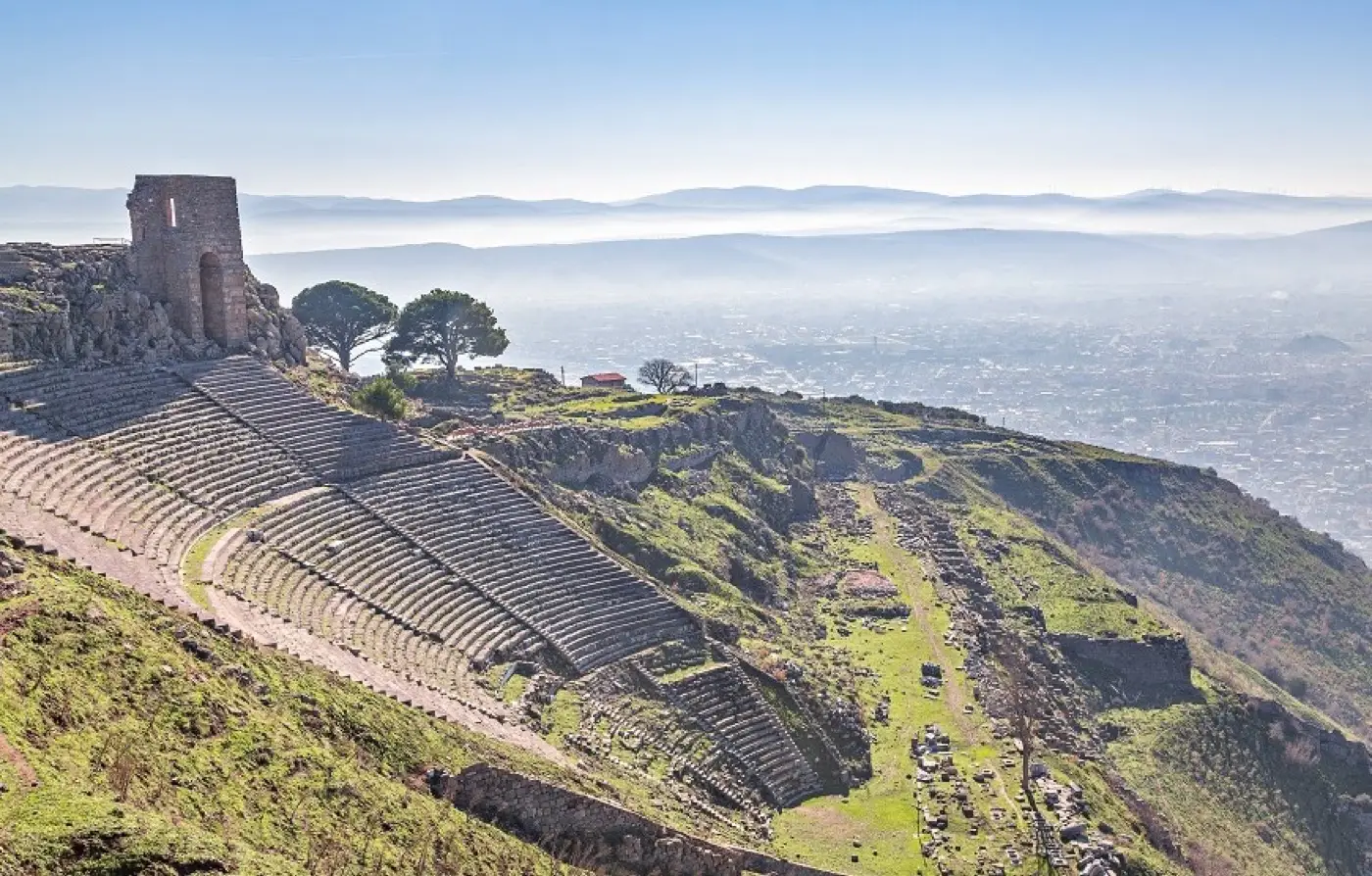
A short drive inland from Ayvalık brings you to Bergama and Pergamon, listed by UNESCO in 2014. Its acropolis, with one of the steepest ancient theatres in the world, and the Asklepion healing sanctuary below are both highlights. Allow a morning, then continue south past İzmir.
İzmir and Ephesus
From Pergamon, İzmir is roughly 100 km. You can stop in the city or continue around it to Selçuk, about an hour further south. Selçuk is the base for Ephesus, a UNESCO site and one of the best-preserved Roman cities in the Mediterranean, with the Library of Celsus and its great theatre. Nearby are the House of the Virgin Mary and the hill village of Şirince.
Visit Ephesus early in the morning, before tour groups and the midday heat.
Overnight: Selçuk or Şirince, ideally two nights.
Pamukkale and Aphrodisias
From Selçuk, Pamukkale is roughly 190 km, about 2.5–3 hours inland. The white travertine terraces and the ancient city of Hierapolis together form the Hierapolis-Pamukkale UNESCO site. Walk the terraces barefoot (shoes are not allowed on them) and swim in the Antique Pool if you like.
On the way, consider a detour to Aphrodisias, the city of Aphrodite, listed by UNESCO in 2017, with its beautifully restored Tetrapylon gate and huge stadium. It is far quieter than Ephesus.
Overnight: Pamukkale or nearby Karahayıt.
Pamukkale to Fethiye
The last leg descends from the inland plateau to the Lycian coast, roughly 220–240 km and about 3–3.5 hours. As you approach Fethiye, the landscape changes to pine-covered mountains and sea inlets.
If you want a final stop before Fethiye, Dalyan is a short detour, with its river channel, Lycian rock tombs and turtle beach. Our Istanbul to Dalyan route idea follows this exact line.
Sample Aegean itinerary: Istanbul to Fethiye in 8 days
A starting point, not a fixed plan:
- Istanbul to Çanakkale via Gallipoli (about 320 km + peninsula). Overnight Çanakkale.
- Troy, Assos, Ayvalık (about 170 km). Overnight Ayvalık.
- Pergamon to Selçuk (about 230 km). Overnight Selçuk or Şirince.
- Ephesus and Şirince, no long drive. Overnight Selçuk.
- Aphrodisias and Pamukkale (about 190 km + detour). Overnight Pamukkale.
- Pamukkale to Fethiye or Ölüdeniz (about 220–240 km). Overnight Ölüdeniz.
- Fethiye area: Blue Lagoon, Butterfly Valley or Kayaköy. Overnight Ölüdeniz.
- Saklıkent, then Dalaman Airport for your flight home.
For more sample plans, see our Turkey road trip itinerary with 7, 10 and 14-day versions.
Fethiye highlights once you arrive
Ölüdeniz and the Blue Lagoon
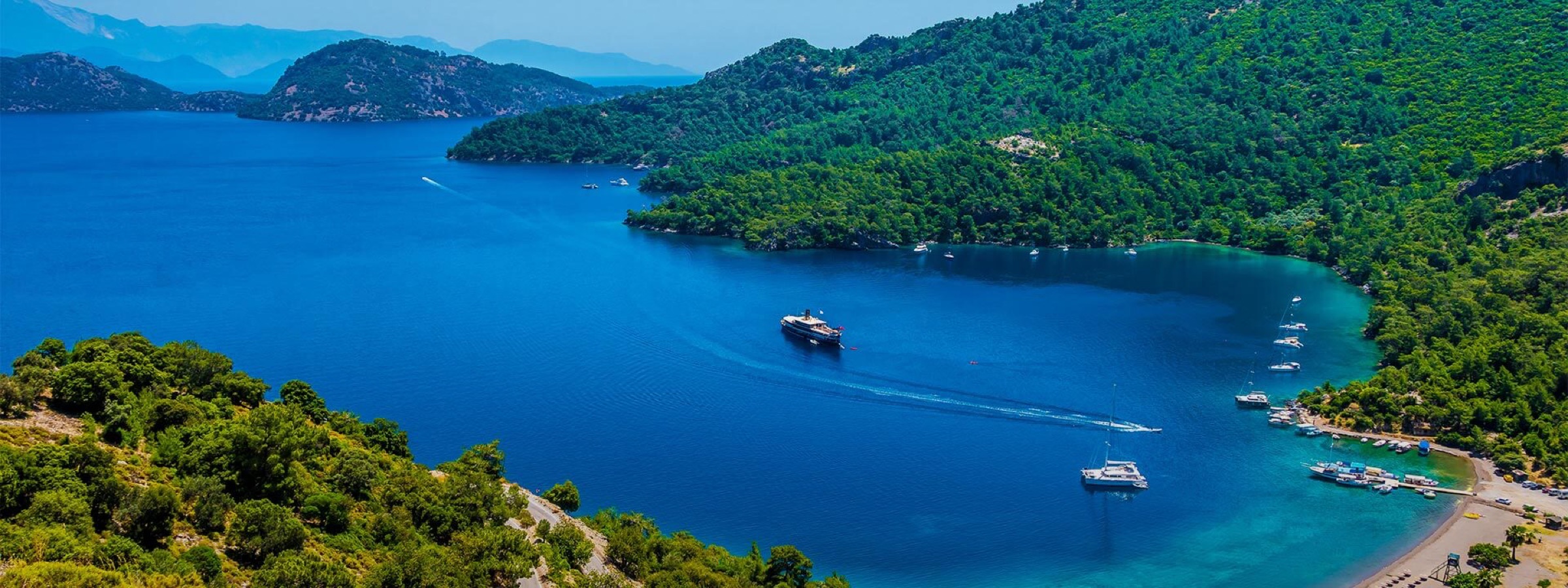
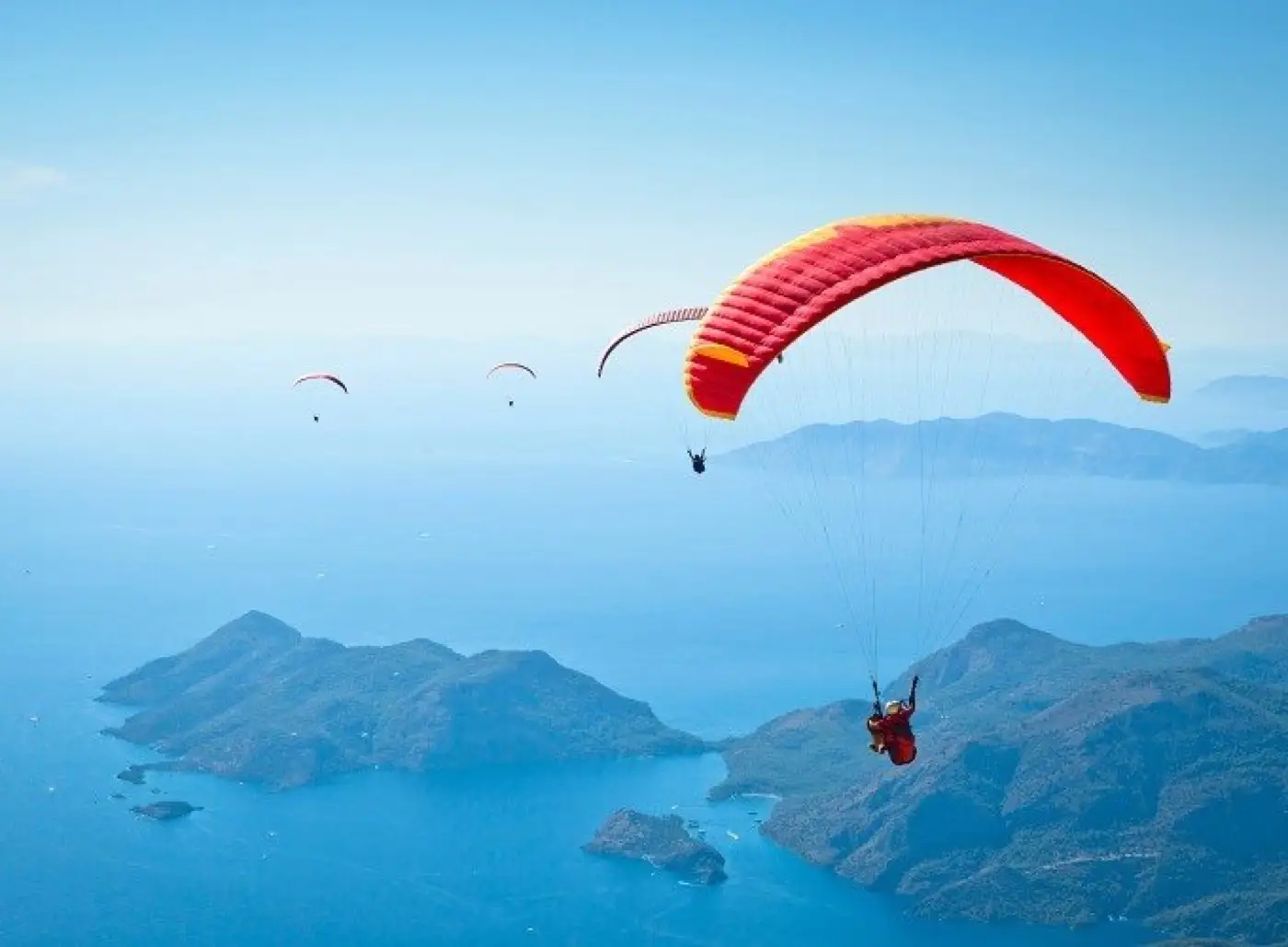
The Blue Lagoon at Ölüdeniz is one of Turkey's most photographed beaches: a sheltered, shallow lagoon of pale turquoise water behind a sand spit, framed by pine forest. Above it rises Babadağ, one of the world's best-known paragliding spots. Tandem flights land on the beach.
Butterfly Valley
Butterfly Valley (Kelebekler Vadisi) is a steep-sided valley ending in a small beach, south of Ölüdeniz. It is best reached by boat from Ölüdeniz. A trail down from the village of Faralya exists, but it is steep and only for confident hikers.
Kayaköy
Kayaköy, in the hills between Fethiye and Ölüdeniz, is a hillside of hundreds of roofless stone houses and churches. It was a Greek town, largely abandoned after the 1923 population exchange between Greece and Turkey, and is especially atmospheric in late afternoon light.
Saklıkent Gorge
Inland from Fethiye, Saklıkent is a narrow, deep canyon with an icy river running out of it. You wade through cold water between towering walls, so bring shoes you do not mind getting wet. In early spring the water can be too high to enter far.
Fethiye town and the Lycian coast
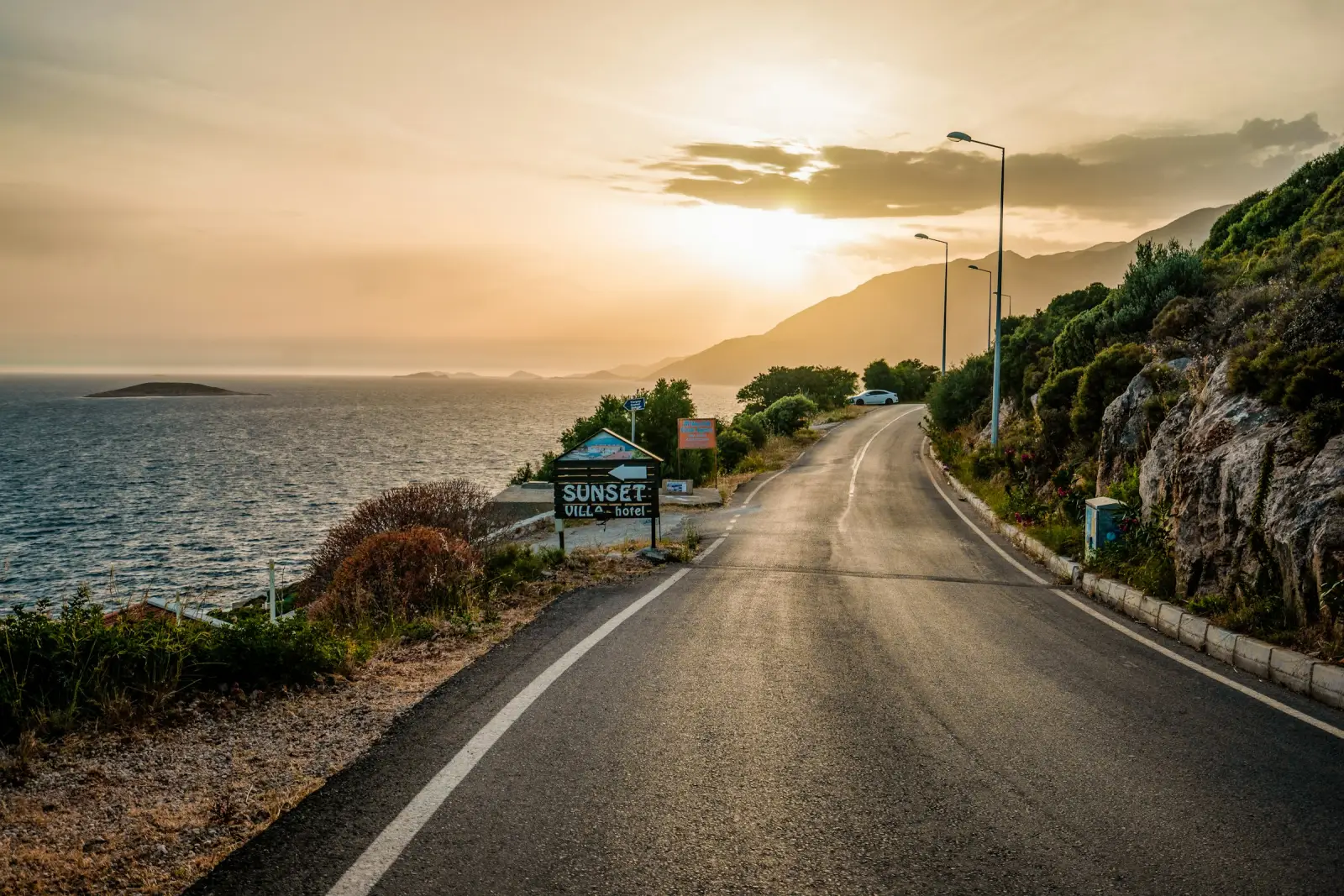
Fethiye itself has a lively harbour, a fish market and Lycian rock tombs carved into the cliff above town. Boat trips around the Twelve Islands leave from the harbour. From here, the Lycian coast road continues east to Kalkan, Kaş and eventually Antalya.
Choosing where to sleep on the way
The right overnight stops depend on your pace. A few rules of thumb help:
- Two nights in Selçuk is the single best upgrade to any version of this trip. It gives you a full day for Ephesus, the Terrace Houses and Şirince without driving.
- Çanakkale or Ayvalık? Çanakkale is practical for Gallipoli and Troy; Ayvalık is more charming, with better food and the sea on your doorstep.
- Pamukkale or Karahayıt? Pamukkale village puts you closest to the travertines for sunset and sunrise; Karahayıt, a few minutes away, has thermal-spring hotels.
- Ölüdeniz, Fethiye or Kayaköy? Choose Ölüdeniz for the beach, Fethiye town for restaurants and boat trips, and Kayaköy for peace and quiet.
Practical tips for the drive
- Driving times are approximate. Add time for city traffic, roadworks and photo stops, especially on the coastal stretches.
- Fuel and services are plentiful on motorways; on smaller Aegean roads stations are still common but less frequent.
- Summer heat inland around Pamukkale can be intense. Start early, visit sites in the morning and drive in the afternoon with air conditioning.
- One-way rentals between Istanbul and Dalaman are possible but should be arranged in advance.
- Ferries and bridge: with the 1915 Çanakkale Bridge you can skip the ferries entirely, but the short Dardanelles car ferries are still useful if you visit Gallipoli first.
Plan it as a self-drive trip
Road Trip Turkey designs tailor-made self-drive trips from Istanbul to Fethiye. We plan the route and the number of nights at each stop with you, book your hotels and rental car, and give you 24/7 support on the road.
Whether you want the fast two-day drive or a slow week down the Aegean, tell us your dates and interests and we will send you a personal itinerary, starting from our Istanbul to Fethiye route idea.