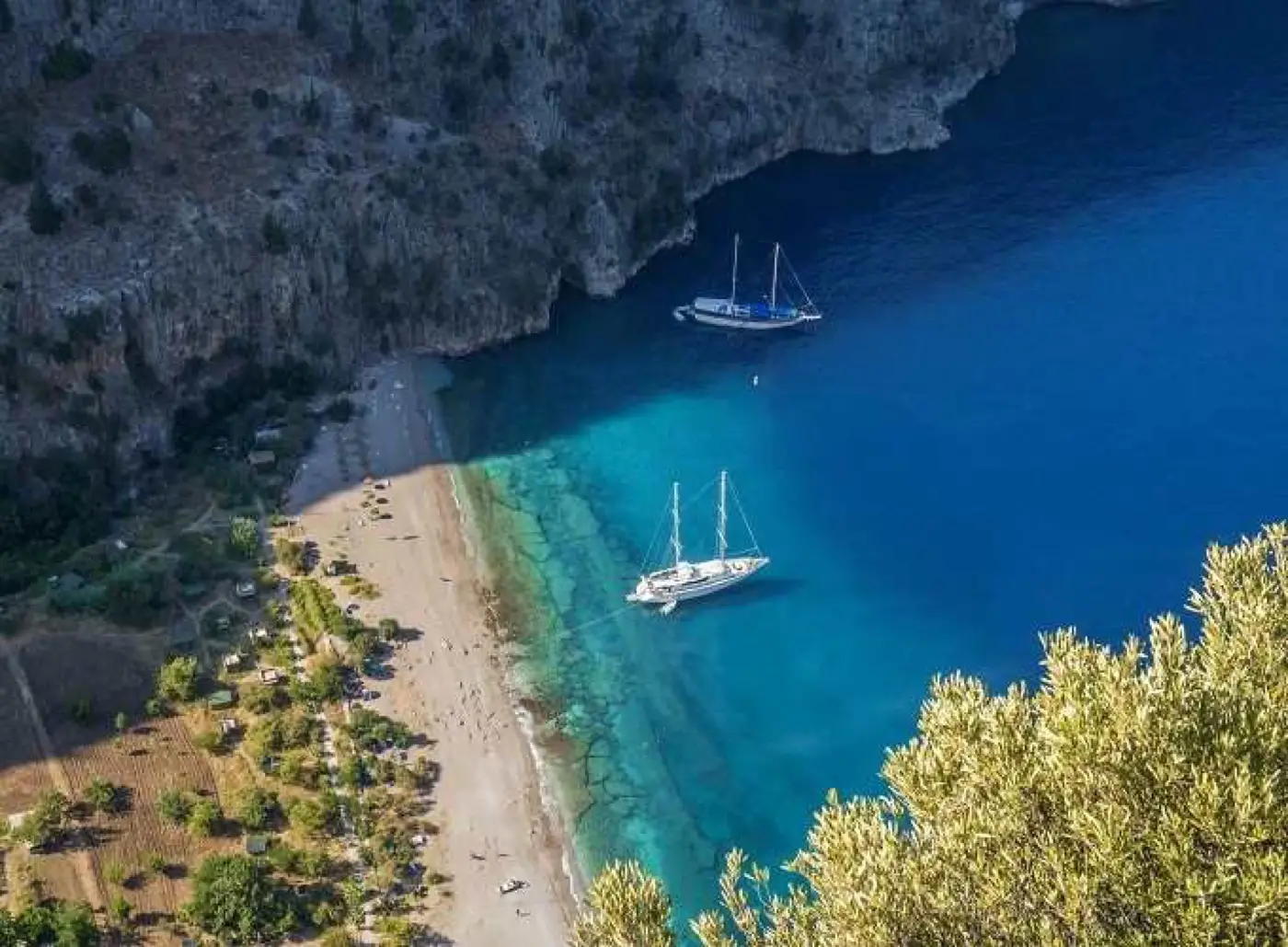
The Lycian coast road trip from Antalya to Fethiye follows the D400 coastal highway for roughly 290–300 km. Without stops the drive takes about 5–6 hours, but almost nobody drives it in one go: with ancient harbours, sunken cities, beaches and two UNESCO-listed Lycian sites along the way, it is best spread over 5–7 days.
This guide follows the coast from east to west, stop by stop, with tips on driving the road itself and when to go.
Quick facts
- Distance: about 290–300 km from Antalya to Fethiye on the D400 coastal road
- Approximate drive time: 5–6 hours non-stop; plan around 2–2.5 hours of driving per day
- Recommended days: 5–7 days; 4 days at a push
- Best season: May to June and September to October; July and August are hot and busy
- Key bases: Olympos or Çıralı, Kaş, Kalkan, Ölüdeniz
The route in brief
| Leg | Approx. distance | Approx. drive |
|---|---|---|
| Antalya – Phaselis – Olympos/Çıralı | 85 km | 1.5 hours |
| Olympos – Demre (Myra) – Kaş | 125 km | 2–2.5 hours |
| Kaş – Kalkan | 25–30 km | 30–40 minutes |
| Kalkan – Fethiye / Ölüdeniz | 75–85 km | 1.5–2 hours |
The road runs through Kemer, Kumluca, Finike and Demre before reaching Kaş, then continues past Kalkan, the Patara and Xanthos turn-offs and on to Fethiye. Our Antalya to Blue Lagoon route idea follows exactly this line.
Antalya: the old town
Start in Kaleiçi, Antalya's walled old town above the Roman harbour. Its lanes of Ottoman houses lead to Hadrian's Gate, the Yivli Minaret and cliff-top views over the bay. The Antalya Museum is one of the best in Turkey for Lycian and Pamphylian finds, and an excellent introduction to the ruins you are about to see.
If you have an extra day, the mountain city of Termessos and the prehistoric Karain Cave lie inland, north-west of the city. Both are covered in our Antalya to Dalyan road trip guide.
Kemer and the first coastal stretch
Leaving Antalya, the D400 squeezes between the Taurus Mountains and the sea, partly through tunnels, towards Kemer, a resort town with a marina and pebble beaches. Just before Kemer, Göynük Canyon offers a short walk or swim in a cold mountain river.
Phaselis
Phaselis is one of the most beautiful ruins on the coast. The ancient port city had three harbours, and today you can swim in clear water right beside the ruins, under pine trees and with Mount Olympos (Tahtalı) rising behind. A paved Roman street, an aqueduct and a small theatre complete the picture. Come early or late in summer to avoid the midday heat.
Olympos and Çıralı
A side road leads down from the D400 to two neighbouring beaches: Olympos, with the ruins of an ancient Lycian city scattered along a wooded river valley, and Çıralı, a quiet village of family-run guesthouses behind a long pebble beach. Loggerhead turtles nest on this coastline, so parts of the beach are protected.
After dark, walk up to the Chimaera (Yanartaş), where natural gas seeping from the rock burns as small, permanent flames. The trail from Çıralı takes around half an hour or more, uphill; bring a torch.
Overnight: Olympos or Çıralı.
Kekova, Üçağız and Simena
West of Demre, a winding side road leads down to the village of Üçağız, the main departure point for boat and sea-kayak trips to Kekova. Along the shore of Kekova Island, the remains of an ancient settlement lie partly submerged, so you can see walls, stairs and foundations under the clear water. Swimming directly over the sunken ruins is not allowed, but boats and kayaks glide alongside.
Across the bay, Simena (today's Kaleköy) is a tiny village with no road access, crowned by a castle and with a Lycian sarcophagus standing in the water. Kekova trips also run from Kaş, but leaving from Üçağız means less time on the boat.
Myra and Demre
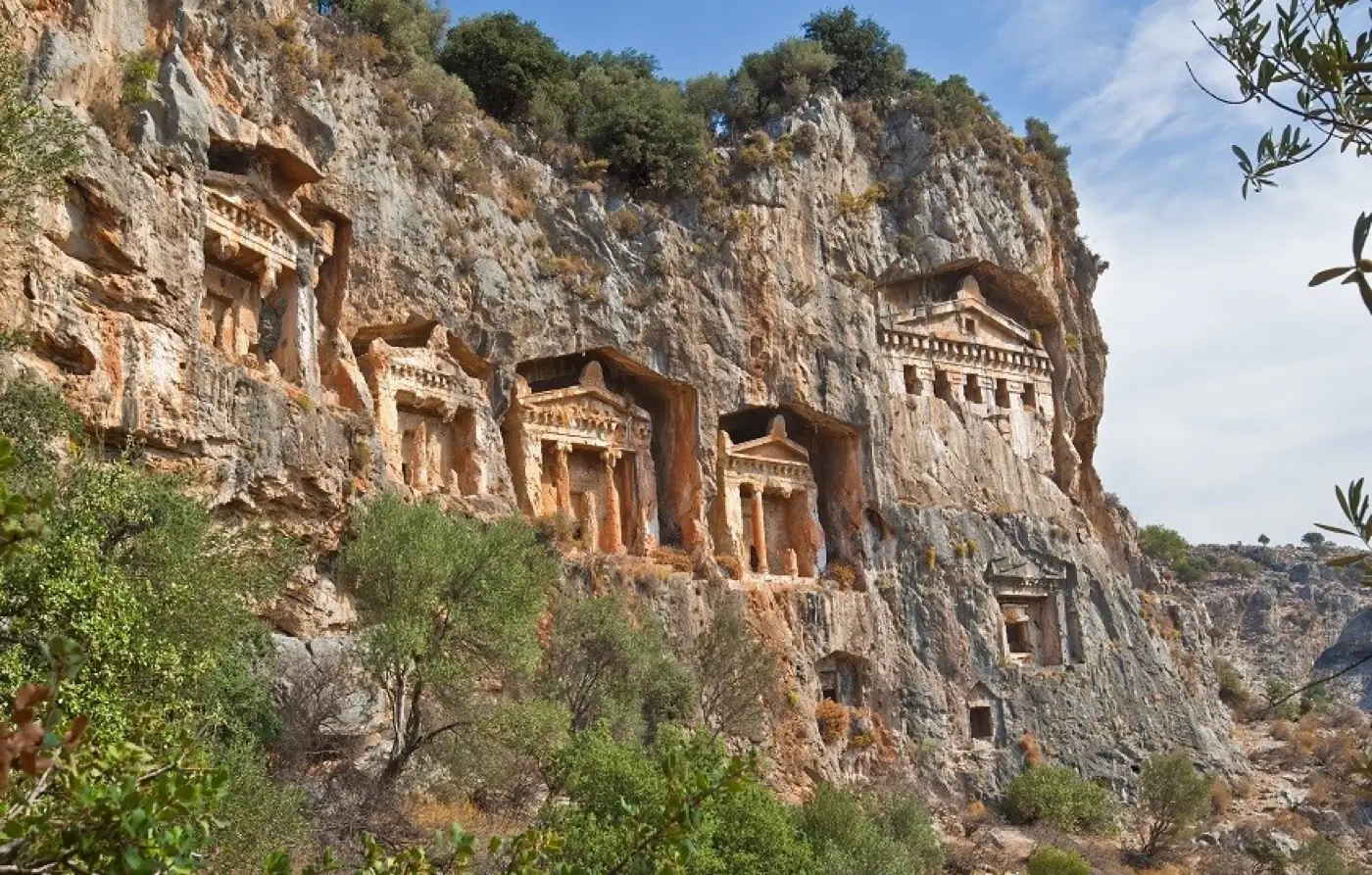
In Demre, the ancient city of Myra has one of the most striking cliff faces in Lycia, honeycombed with house-shaped rock tombs, above a large Roman theatre. Nearby is the Church of St Nicholas, linked to the 4th-century bishop who inspired the Santa Claus story. A few kilometres away, Andriake, Myra's ancient harbour, has a museum of Lycian civilisations.
Demre is also known for its greenhouses, so don't be surprised by the sea of plastic roofs as you drive in.
Kaş
Kaş is the favourite base on the Lycian coast for many travellers: a small harbour town with bougainvillea-covered lanes, a Hellenistic theatre facing the sea and a relaxed evening atmosphere. Swimming here is mostly from rocky platforms and small coves, and Kaş is one of Turkey's best-known diving spots.
Spend two nights here so you have a full day for Kekova or a boat trip, without driving. The Greek island of Kastellorizo (Meis) lies just offshore.
Overnight: Kaş, two nights.
Kaputaş and Kalkan
Between Kaş and Kalkan, the D400 runs along high cliffs, and this is the most spectacular stretch of the whole road. Halfway along, steps lead down from the road to Kaputaş, a small sandy beach with brilliant turquoise water at the mouth of a gorge. Parking is limited by the roadside, so arrive early in summer.
Kalkan is a smart little town of white houses stacked above a marina, with rooftop restaurants and villas with pools on the slopes around it.
Patara
West of Kalkan, a short side road leads to Patara, one of the longest sandy beaches in Turkey, backed by dunes and an important nesting site for loggerhead turtles. The ruins of ancient Patara, once a leading city of the Lycian League, stand behind the beach, including a restored assembly hall (bouleuterion), a colonnaded street and a theatre. The beach has no buildings along its length, which makes it feel wild and empty even in summer.
Xanthos and Letoon (UNESCO)
A few kilometres inland, Xanthos, the capital of ancient Lycia, and Letoon, its religious sanctuary, together form the Xanthos-Letoon UNESCO World Heritage Site, inscribed in 1988. Xanthos has pillar tombs and a theatre on a hill above the river, and many of its famous monuments are now in the British Museum. Letoon has three temples dedicated to Leto, Artemis and Apollo, and a trilingual inscription important for understanding the Lycian language. Visit both on the same morning.
Saklıkent Gorge
Further inland, towards Fethiye, Saklıkent is a narrow canyon with walls hundreds of metres high, cut by an ice-cold river. You walk along a boardwalk, then wade upstream through the water between the cliffs. Wear shoes that can get wet. In early spring the water may be too high to go far; by summer it is a welcome escape from the heat. Nearby Tlos is another dramatically sited Lycian city with rock tombs.
Ölüdeniz and the Blue Lagoon
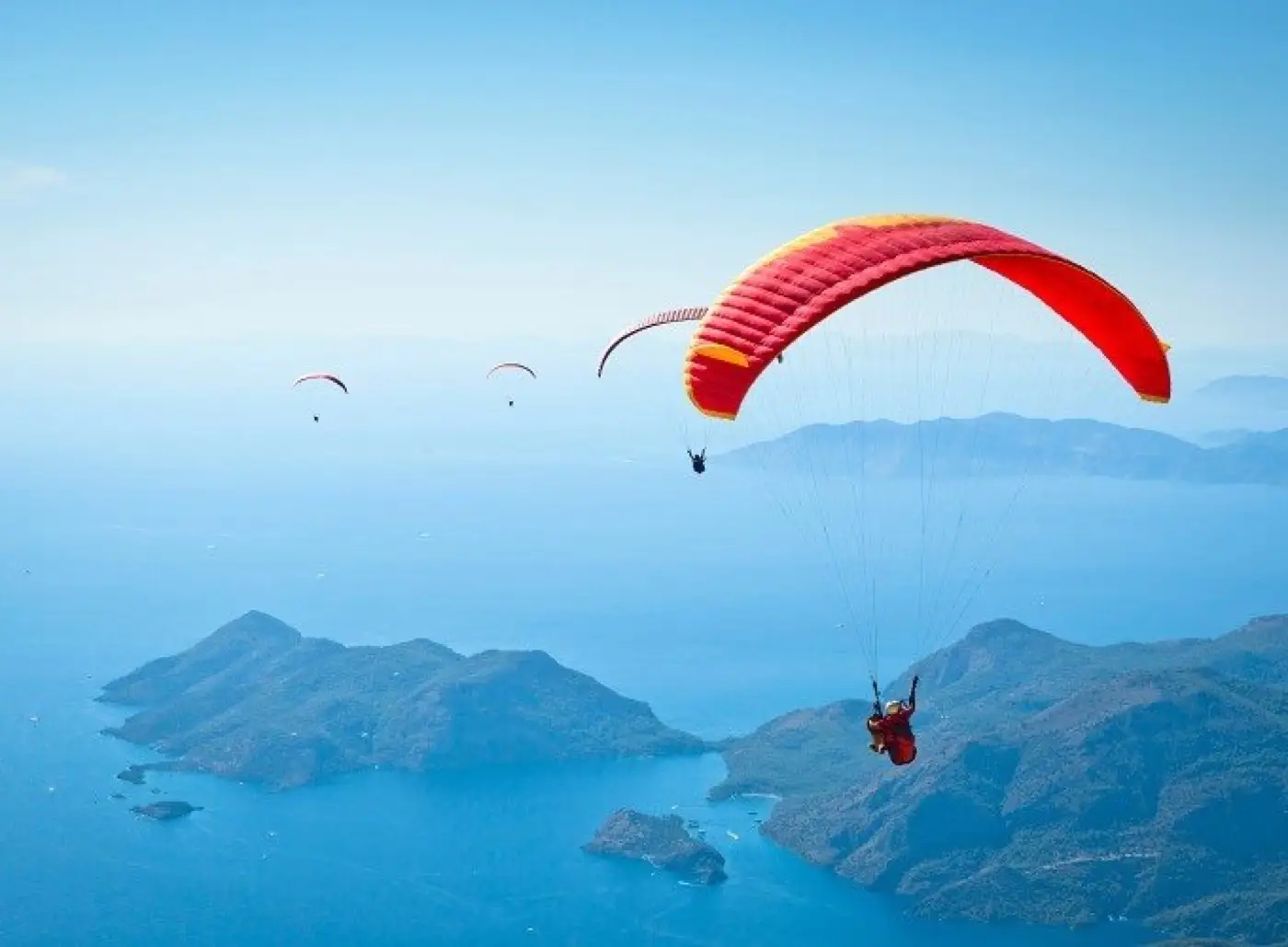
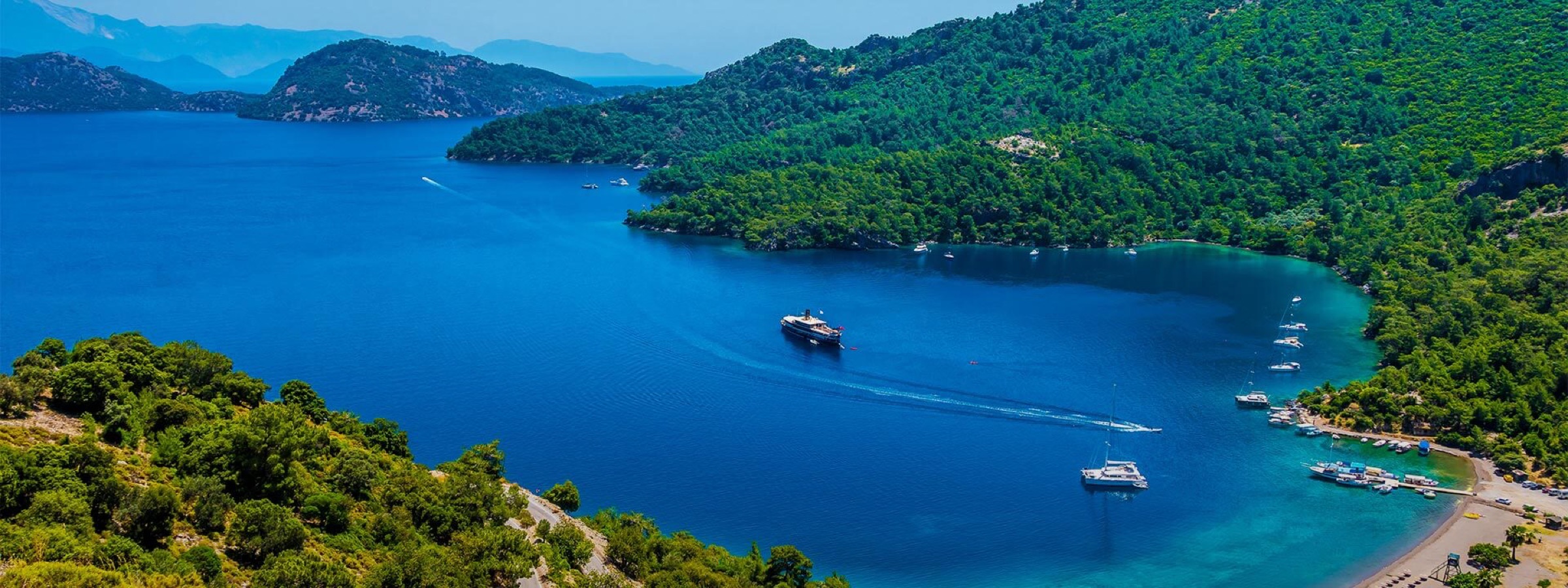
The road trip ends at Ölüdeniz, south of Fethiye. The Blue Lagoon is a sheltered, shallow lagoon of turquoise water, protected as a nature park, with a long beach in front of it. Above rises Babadağ, a world-famous paragliding launch with tandem flights landing on the beach. Boats leave for Butterfly Valley, and the abandoned stone village of Kayaköy is a short drive into the hills.
From here, Dalyan is about an hour and a half further west, and Dalaman Airport is close by, which makes it easy to end the trip.
Driving the D400 coastal road
The D400 is a good, mostly well-surfaced road, but it is not a motorway. What to expect:
- Curves and climbs. Much of the route between Kemer and Kumluca runs inland through pine-covered hills, while Finike to Kaş and Kaş to Kalkan hug the coast. Many sections are winding, with steep drops on one side.
- Viewpoints. There are pull-outs at the best spots, especially between Kaş and Kalkan and above Kaputaş. Use them rather than stopping on bends.
- Slow traffic. Expect tractors, trucks and tour coaches on the climbs, especially near Demre and Finike. Overtake only where you can see far ahead.
- Side roads are narrower. The roads down to Üçağız, Olympos and Patara are smaller and twistier than the D400 itself.
- Drive in daylight. The scenery is the point, and the curves are easier to read in good light.
- Fuel is easy to find in towns like Kemer, Kumluca, Finike, Demre, Kaş and Kalkan.
For speed limits, cameras and general rules, see our guide to driving in Turkey.
When to go
- May and June: warm sea by late May, wildflowers, longer days and fewer crowds than midsummer. Ideal.
- July and August: peak season, hot and busy, with every boat trip running. Book hotels well ahead and plan sightseeing for early morning.
- September and October: the sea is at its warmest, the crowds thin out and the light is beautiful. Arguably the best time.
- November to April: mild and quiet, good for walking and ruins, but some seasonal hotels and boat trips close, and the sea is cool.
More detail is in our best time for a road trip in Turkey guide.
Sample 6-day plan
- Antalya – Phaselis – Olympos/Çıralı (85 km). Chimaera after dark.
- Olympos – Myra – Kaş (125 km). Overnight Kaş.
- Kekova from Üçağız or Kaş. Overnight Kaş.
- Kaş – Kaputaş – Kalkan – Patara (about 70 km). Overnight Kalkan or Patara.
- Xanthos, Letoon, Saklıkent – Ölüdeniz. Overnight Ölüdeniz.
- Blue Lagoon, Butterfly Valley or Kayaköy, then on to Dalaman.
To combine this coast with the Aegean or Cappadocia, see our Turkey road trip itinerary.
Plan it as a self-drive trip
Road Trip Turkey designs tailor-made self-drive trips along the Lycian coast. We plan the route and the nights in each town around you, book your hotels and rental car, and give you 24/7 support while you drive.
Tell us your dates, how much beach time you want and whether you prefer lively towns or quiet villages, and we will send you a personal itinerary, starting from our Antalya to Blue Lagoon or Antalya to Dalyan route ideas.