The drive from Istanbul to Cappadocia covers roughly 730–750 km and takes about 8–9 hours of pure driving on the fastest route, the motorway via Ankara. Doing it in one go is possible, but it wastes one of the best road journeys in Turkey. Most travellers split it over two days, with a night in Ankara or Safranbolu, and arrive in Göreme rested and ready for the valleys.
This guide compares the three main routes, explains where to break the drive, and covers what to see on the way and how driving works once you reach Cappadocia.
Quick facts
- Distance: about 730–750 km via Ankara; roughly 900 km or more via Safranbolu
- Approximate drive time: 8–9 hours non-stop via Ankara; plan on two driving days for any scenic route
- Recommended days: 2 days for the drive, plus at least 2–3 nights in Cappadocia
- Best season: April to June and September to October; winter is beautiful but brings snow and short days on the plateau
- Road type: dual-carriageway motorway for most of the Ankara route; good two-lane and four-lane roads elsewhere
Is it worth driving from Istanbul to Cappadocia?
Many visitors fly to Kayseri or Nevşehir. Flying is faster, but you lose everything between the two: the forested lakes around Bolu, Ankara's two great sights, the white crust of Tuz Gölü (Salt Lake) and, if you are curious, the Hittite capital at Hattusa. You also arrive with a car, which in Cappadocia is a real advantage, because the valleys, viewpoints and underground cities are spread across a wide area.
Driving also makes the rest of a trip easy. From Cappadocia the road continues south over the Taurus Mountains to Konya and Antalya, which is how our Istanbul – Cappadocia – Antalya via Ankara and via Safranbolu route ideas work.
If this is your first time behind the wheel in Turkey, read our guide to driving in Turkey and the self-drive Turkey guide before you go.
Route options at a glance
| Route | Approx. distance | Character | Best for |
|---|---|---|---|
| Via Ankara (motorway) | 730–750 km | Fastest, mostly motorway | Time-poor travellers, history lovers |
| Via Bolu and the Abant lakes | Slightly longer than the Ankara route | Forest and lake detour, then motorway | Nature, a relaxed first day |
| Via Safranbolu | 900+ km | Ottoman town, Black Sea hinterland | Slow travel, architecture |
Route 1: Istanbul – Ankara – Cappadocia (the fastest)
This is the classic route. You leave Istanbul on the motorway towards Ankara, crossing to the Asian side by one of the Bosphorus bridges or the tunnel, then run east past İzmit and Düzce. The road climbs through the Bolu Mountain section, where a long tunnel carries the motorway through the hills, before descending onto the open plateau towards Ankara.
Istanbul to Ankara is roughly 450 km, about 4.5–5.5 hours depending on traffic leaving the city. From Ankara to Göreme is roughly 290–300 km, about 3–3.5 hours. The newer Ankara–Niğde motorway runs south past Tuz Gölü towards Aksaray, and from there good roads lead east into Cappadocia. An alternative from Ankara runs via Kırşehir; your navigation app will pick whichever is faster on the day.
Where to break the drive: Ankara is the natural overnight stop. It splits the journey into two manageable days and gives you time for Anıtkabir and the Museum of Anatolian Civilizations.
Route 2: Via Bolu and the Abant lakes
This is not really a separate road, more a better way to drive the first half of Route 1. Around the Bolu Mountain area, a side road of a little over 20 km leaves the main road and climbs through forest to Abant Lake, a mountain lake ringed by pine and beech woods. It is one of the most popular nature escapes in northwest Turkey and a lovely place for lunch and a walk around the shore.
Nearby Gölcük Lake, closer to Bolu town, is smaller and quieter. In autumn the beech forests around both turn copper and gold. From here you rejoin the motorway to Ankara, so the detour costs a few hours rather than a whole day.
Route 3: Via Safranbolu
If you have an extra day, the northern route is the most atmospheric. Safranbolu lies roughly 390–410 km from Istanbul, about 4.5 hours by car. The town is a UNESCO World Heritage Site, listed for its remarkably preserved Ottoman timber-framed mansions, cobbled lanes and old caravanserai. Staying a night in a restored mansion is part of the experience.
The drive there can also take in Abant Lake or Gölcük Lake, and in season the Yedigöller (Seven Lakes) National Park, a valley of small forest lakes. The catch is the second day: from Safranbolu to Cappadocia is a long leg of roughly 500 km across the plateau, around 6–6.5 hours of driving. It suits travellers who enjoy the road itself.
What to see on the way
Abant Lake
A mountain lake set in a protected nature park, roughly 225 km from Istanbul. It works best as a long lunch stop on day one. Expect more visitors at weekends and on Turkish public holidays.
Ankara: Anıtkabir and the Museum of Anatolian Civilizations
Turkey's capital is often skipped, which is a mistake for anyone interested in history. Anıtkabir, the monumental mausoleum of Mustafa Kemal Atatürk, sits on a hill above the city with a museum about the founding of the Republic. It is a place of real national significance, so dress respectfully.
The Museum of Anatolian Civilizations is one of the finest archaeological museums in the country. Its galleries walk you through Anatolia from the Palaeolithic to the Hittites, Phrygians and Urartians, which makes it the perfect preparation for the sites further along your trip. An early start in Ankara lets you see both and still reach Cappadocia by late afternoon.
On the way to Ankara you can also stop at Gordion, the Phrygian capital associated with King Midas, though it is a detour off the main road.
Tuz Gölü (Salt Lake)
South of Ankara, the road passes Tuz Gölü, Turkey's second-largest lake and one of the largest hypersaline lakes in the world. In summer much of it dries to a dazzling white salt crust that you can walk on near the shore. It is a quick and memorable leg-stretch; bring sunglasses, because the glare is intense.
Ihlara Valley
If your route takes you via Aksaray, consider stopping at the Ihlara Valley, a deep river gorge with rock-cut churches along its walls. It sits on the western edge of Cappadocia and makes a good walk before you continue to Göreme.
Hattusa: the Hittite detour
Hattusa (Hattusha), near the village of Boğazkale, was the capital of the Hittite Empire and is a UNESCO World Heritage Site. It lies about 200 km east of Ankara, so it is not on the way; it is a deliberate detour. Many travellers combine it with nearby Alacahöyük, then continue south to Cappadocia.
Adding Hattusa turns the Ankara–Cappadocia leg into a full, long day, or better, adds a day to the trip. It is worth it if the Hittites interest you, and the Museum of Anatolian Civilizations in Ankara makes a perfect pairing.
Sample two-day plans
Option A (fast and cultural):
- Day 1: Istanbul to Ankara (about 450 km, 4.5–5.5 hours). Optional Abant Lake lunch detour. Overnight in Ankara.
- Day 2: Anıtkabir and the Museum of Anatolian Civilizations in the morning, then Ankara to Göreme (about 300 km, 3–3.5 hours) with a stop at Tuz Gölü.
Option B (scenic):
- Day 1: Istanbul to Safranbolu (about 400 km, around 4.5 hours) via Abant or Gölcük Lake. Overnight in Safranbolu.
- Day 2: Safranbolu to Cappadocia (about 500 km, 6–6.5 hours), with a break at Tuz Gölü.
Option C (with Hattusa):
- Day 1: Istanbul to Ankara.
- Day 2: Ankara to Hattusa and Alacahöyük, overnight in the area.
- Day 3: Continue south to Cappadocia.
Tolls, bridges and practical driving tips
Most of the fast route is on tolled motorways, and some of the bridges around Istanbul are tolled too. Turkey uses an electronic toll system (HGS); rental cars normally come with a tag or sticker, and tolls are settled through the rental company afterwards. There are no cash booths to worry about on most motorways. We cover this in detail in renting a car in Turkey.
A few tips for this route:
- Leave Istanbul early. Traffic in and out of the city is the most unpredictable part of the whole drive. A start before the morning rush makes a real difference.
- Use the service areas. Turkish motorway service stations are frequent and well equipped, with fuel, food and clean facilities.
- Watch the speed limits. Motorway limits are higher than on ordinary roads, and speed cameras, including average-speed sections, are common.
- Plan for the plateau's weather. The central plateau sits high, and from late autumn to early spring snow and fog are possible, especially around the Bolu Mountain area. Check conditions before setting off.
- Fuel is easy on the motorway but stations become more spaced out on secondary roads, so top up before detours like Hattusa.
Arriving in Göreme
Göreme is the most popular base in Cappadocia, a village built among fairy chimneys, with cave hotels cut into the rock. Other good bases are Uçhisar (quieter, with the rock castle and wide views), Ürgüp (a larger town with a good choice of restaurants) and Avanos (on the Kızılırmak river, known for pottery).
Some cave hotels sit up steep, narrow lanes. Ask your hotel in advance where to park, because the last few hundred metres can be tighter than you expect. Arriving in daylight on your first evening makes this much easier.
For what to do once you are there, see our Cappadocia page and the posts on what to do in Cappadocia and the underground cities.
Driving inside Cappadocia
Cappadocia is ideal for a car. The core area is compact, and having your own wheels lets you reach viewpoints at sunrise and sunset, before and after the crowds.
- Distances are short. Göreme, Uçhisar, Ürgüp, Avanos and Ortahisar are all within a short drive of each other.
- The underground cities of Kaymaklı and Derinkuyu lie south of Nevşehir, on the road towards Niğde, and are an easy half-day drive.
- Göreme Open-Air Museum, the rock-cut churches at the centre of the UNESCO-listed Göreme National Park, is just outside the village. Go early.
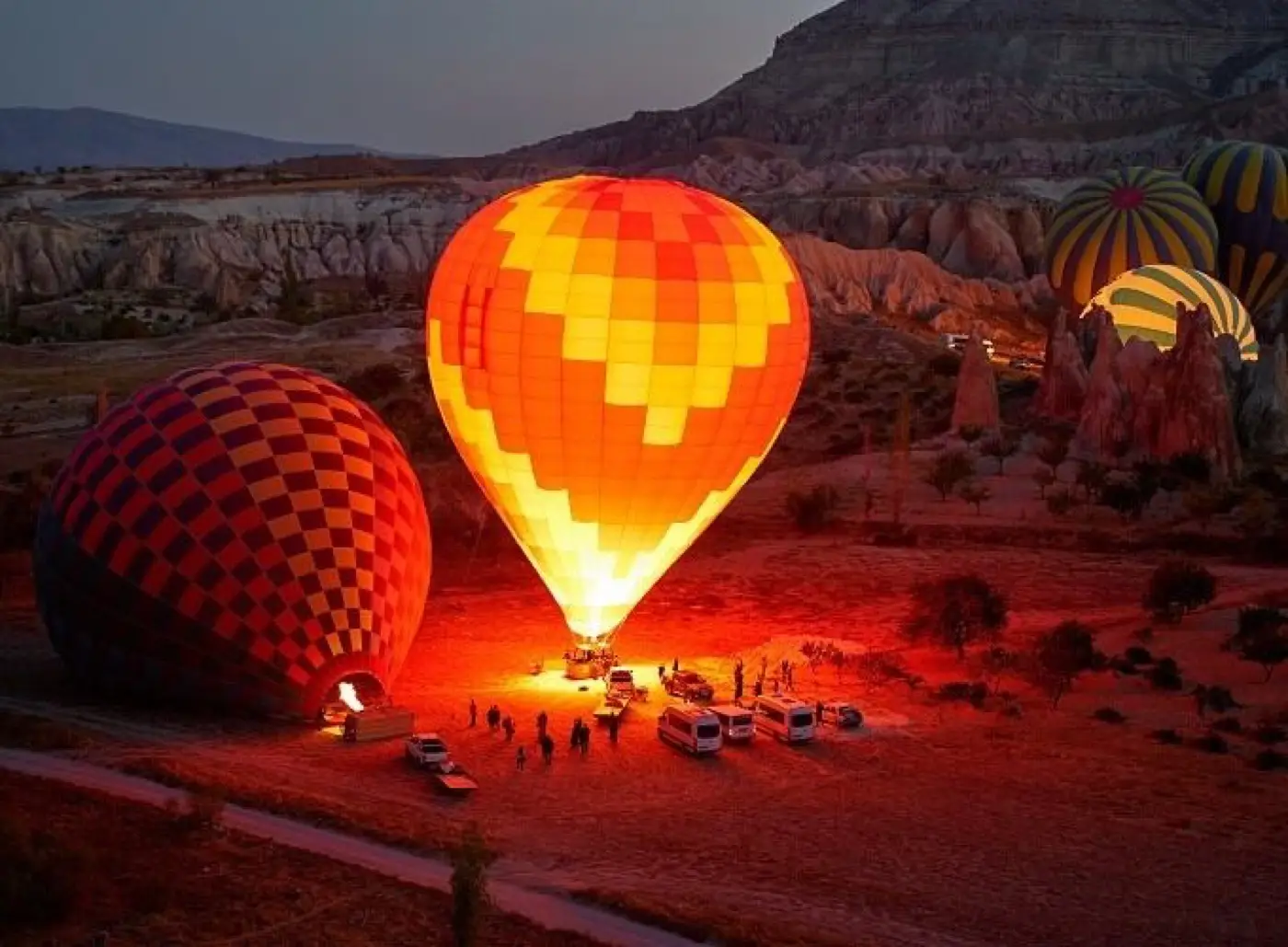
- Sunrise balloon mornings mean many vehicles on the move before dawn around Göreme. Drive slowly in the dark and watch for minibuses and people at the side of the road.
- Valley tracks are often unpaved and dusty. A standard rental car is fine on main roads, but do not try to follow walking trails or rough tracks into the valleys; park and walk instead.
- Parking in Göreme village centre fills up in high season. Many hotels have their own spaces or can point you to the nearest car park.
Most travellers spend two to three nights in Cappadocia, which leaves time for a balloon morning (weather permitting), a valley walk, an underground city and a sunset viewpoint.
Where to go next
From Cappadocia most self-drive trips continue south: Konya, home of the Mevlana Museum, is roughly 230–240 km away, and from there the road crosses the Taurus range to Antalya and the Mediterranean. That makes Istanbul to Antalya via Cappadocia one of the best road trips in Turkey. For full sample day-by-day plans, see our Turkey road trip itinerary.
Plan it as a self-drive trip
Road Trip Turkey designs tailor-made self-drive trips like this one. We plan the route around your dates and pace, book your hotels and rental car, and stay on hand with 24/7 support while you are on the road.
Tell us how many days you have, whether you would rather see Safranbolu or Hattusa, and how much driving feels comfortable, and we will send you a personal itinerary built for you, starting from our Istanbul – Cappadocia – Antalya route idea or something entirely your own.