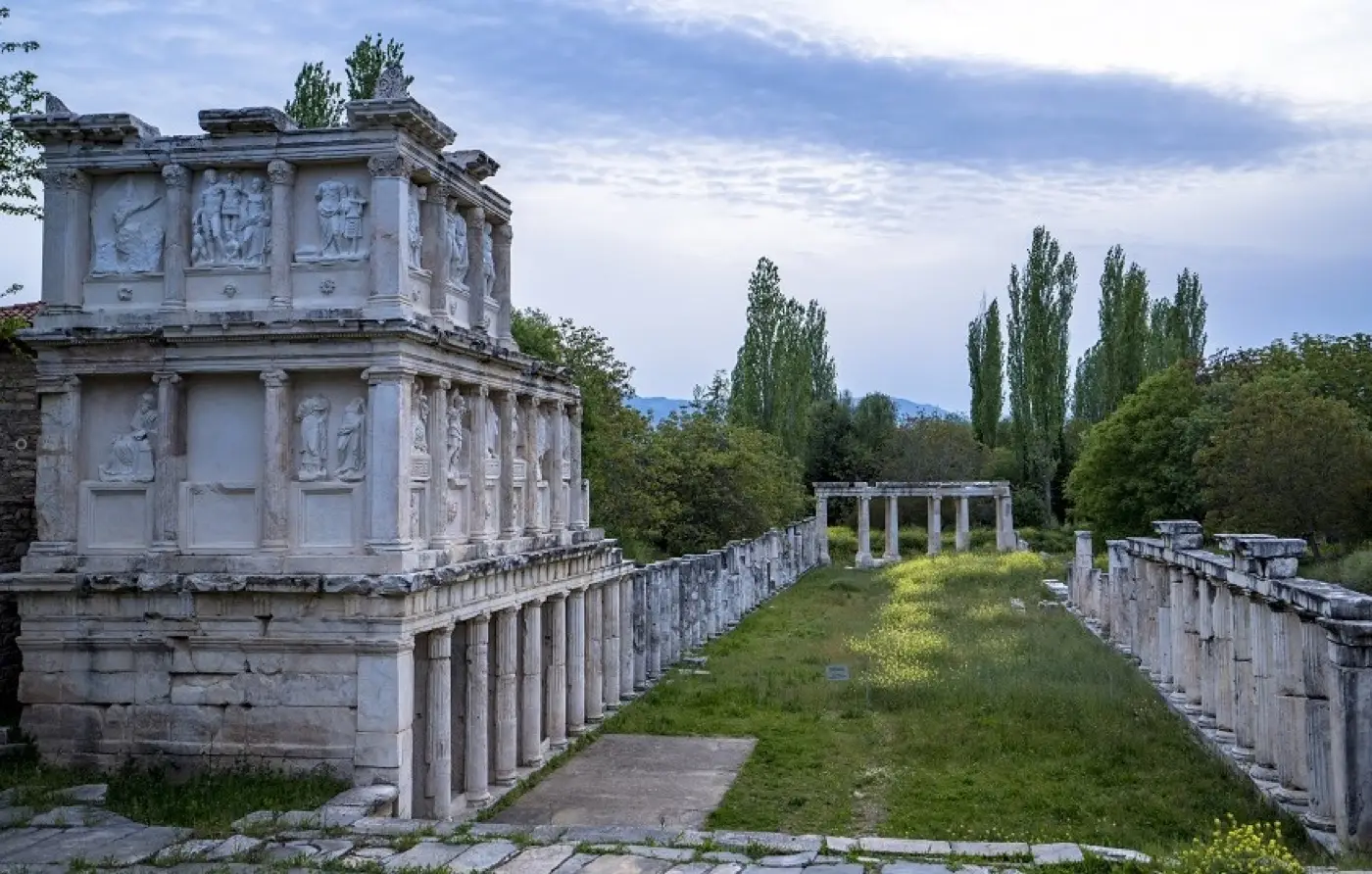
Aphrodisias is an ancient Greco-Roman city in the Aydın province of south-west Turkey, near the village of Geyre, dedicated to Aphrodite, goddess of love. It is known for three things above all: a superbly preserved stadium, the Sebasteion with its carved relief panels, and a school of marble sculptors whose work was admired across the Roman world. In 2017 Aphrodisias was inscribed on the UNESCO World Heritage List, together with the ancient marble quarries that supplied its workshops.
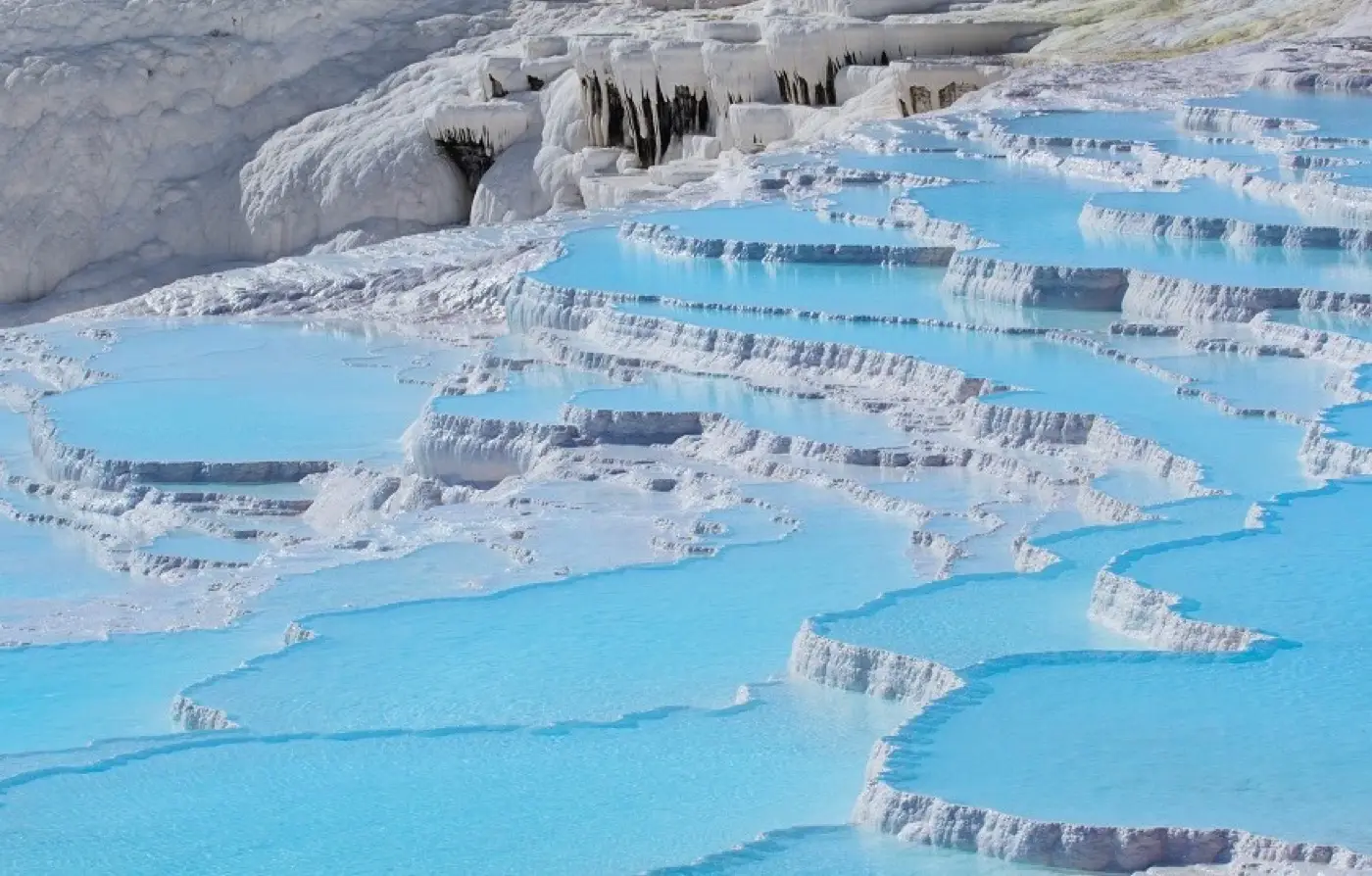
Many travellers have never heard of it, and that is part of its appeal. Aphrodisias is a site of Ephesus quality with a fraction of the visitors. It sits in a green upland valley about an hour and a half from Pamukkale, which makes it an easy and rewarding stop on a self-drive route through the Aegean.
A short history of Aphrodisias
Aphrodisias grew from an old sanctuary of a mother goddess into a city that took the name of Aphrodite around the 3rd century BC. Its great opportunity came with Rome. The family of Julius Caesar and Augustus claimed descent from Venus, the Roman Aphrodite, and the city's loyalty during the civil wars of the 1st century BC brought it special privileges, including a degree of self-government and tax exemptions.
That favour, together with an excellent supply of local marble, made Aphrodisias rich. Over the following centuries it filled with monuments, temples and statues. In late antiquity it became a Christian city: the Temple of Aphrodite was turned into a church and, before the 7th century, the city was renamed Stauropolis, "City of the Cross".
Earthquakes in the 4th and 7th centuries caused severe damage, and the city shrank to a small fortified settlement. A village grew up among the ruins, later called Geyre, a name derived from "Caria", the ancient region. In the 20th century, as excavations expanded, the village was moved a short distance away so that the ancient city could be uncovered.
Systematic excavations began in the early 1960s under the Turkish-born archaeologist Kenan Erim, working for New York University, and they continue today. Much of what makes the site so impressive, including the restored Tetrapylon, is the result of those decades of work.
Aphrodisias and UNESCO
Aphrodisias became a UNESCO World Heritage Site in 2017. The inscription covers two parts: the archaeological site itself and the ancient marble quarries a short distance north-east of the city. Including the quarries is significant, because the marble is the reason the city's sculpture became famous. The raw material was close at hand, and the sculptors who worked it developed a recognisable style that was exported across the empire.
What to see at Aphrodisias
A visit follows a loop path through the main monuments. Allow at least two to three hours for the site and the museum; keen visitors can easily spend half a day.
The Tetrapylon
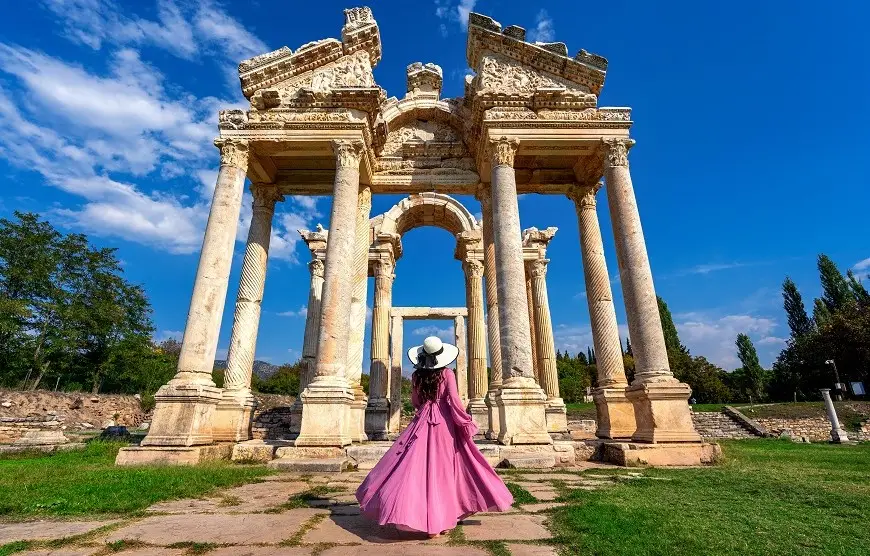
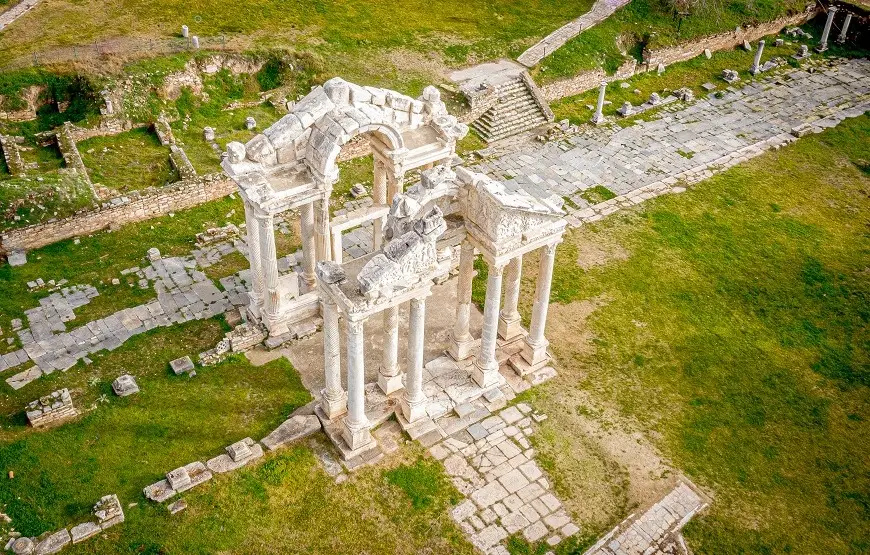
The Tetrapylon is the monumental gateway that once led from the main street into the sacred precinct of Aphrodite, and it is the symbol of Aphrodisias today. Built around AD 200, it has four rows of four columns, some of them fluted in a spiral pattern, and richly carved pediments. It was carefully reassembled in the late 1980s, largely from its original blocks. Kenan Erim, who led the excavations for nearly three decades, is buried beside it.
The Temple of Aphrodite
The Temple of Aphrodite stood at the heart of the city and gave Aphrodisias its identity. It was an Ionic temple surrounded by columns, built from the 1st century BC onwards. In late antiquity it was dismantled and rebuilt as a Christian basilica, which is why the columns you see today stand in a different arrangement from the original temple. A row of its Ionic columns has been re-erected, enough to imagine its scale.
The stadium
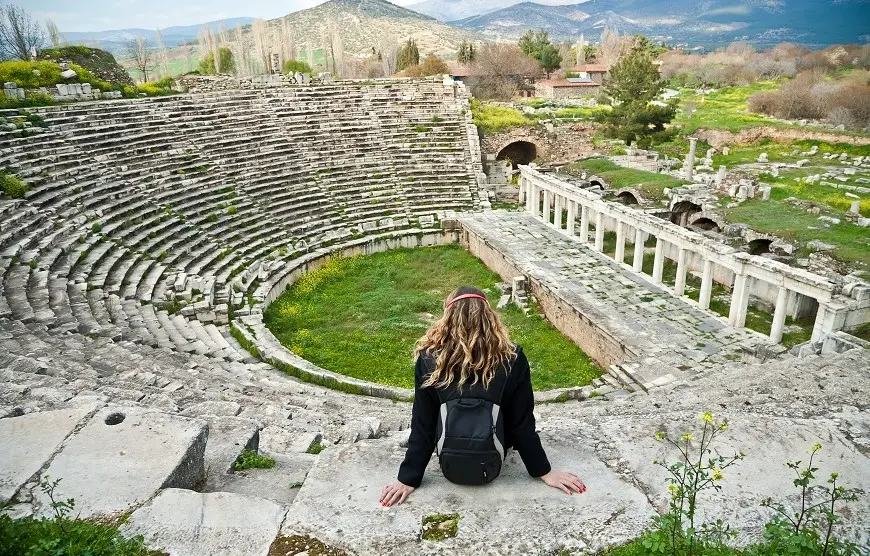
The stadium of Aphrodisias is one of the best-preserved ancient stadiums in the Mediterranean world. Built in the 1st century AD, it measures around 270 metres in length and could seat roughly 30,000 spectators on its stone tiers, most of which are still in place. Unlike a straight stadium, its long sides bulge slightly outward so that spectators had a better view of the track.
Walking into it is a remarkable experience: the seating rises around you almost intact, and you have it nearly to yourself. In late antiquity the eastern end was closed off to create a smaller arena for games and spectacles.
The Sebasteion
The Sebasteion is a 1st-century AD complex dedicated to Aphrodite and the deified Roman emperors, known as the Sebastoi in Greek. It consisted of two long, parallel porticos, three storeys high, lining a processional way that led to a temple. The upper storeys were decorated with large marble relief panels showing gods, myths, the emperors and the peoples of the empire.
The reliefs are among the most important discoveries in Roman art from Asia Minor. Famous panels include the emperor Claudius overpowering a figure representing Britannia, and Nero with his mother Agrippina. Part of the façade has been reconstructed on site, while the original panels are displayed in the museum.
The theatre, bouleuterion and baths
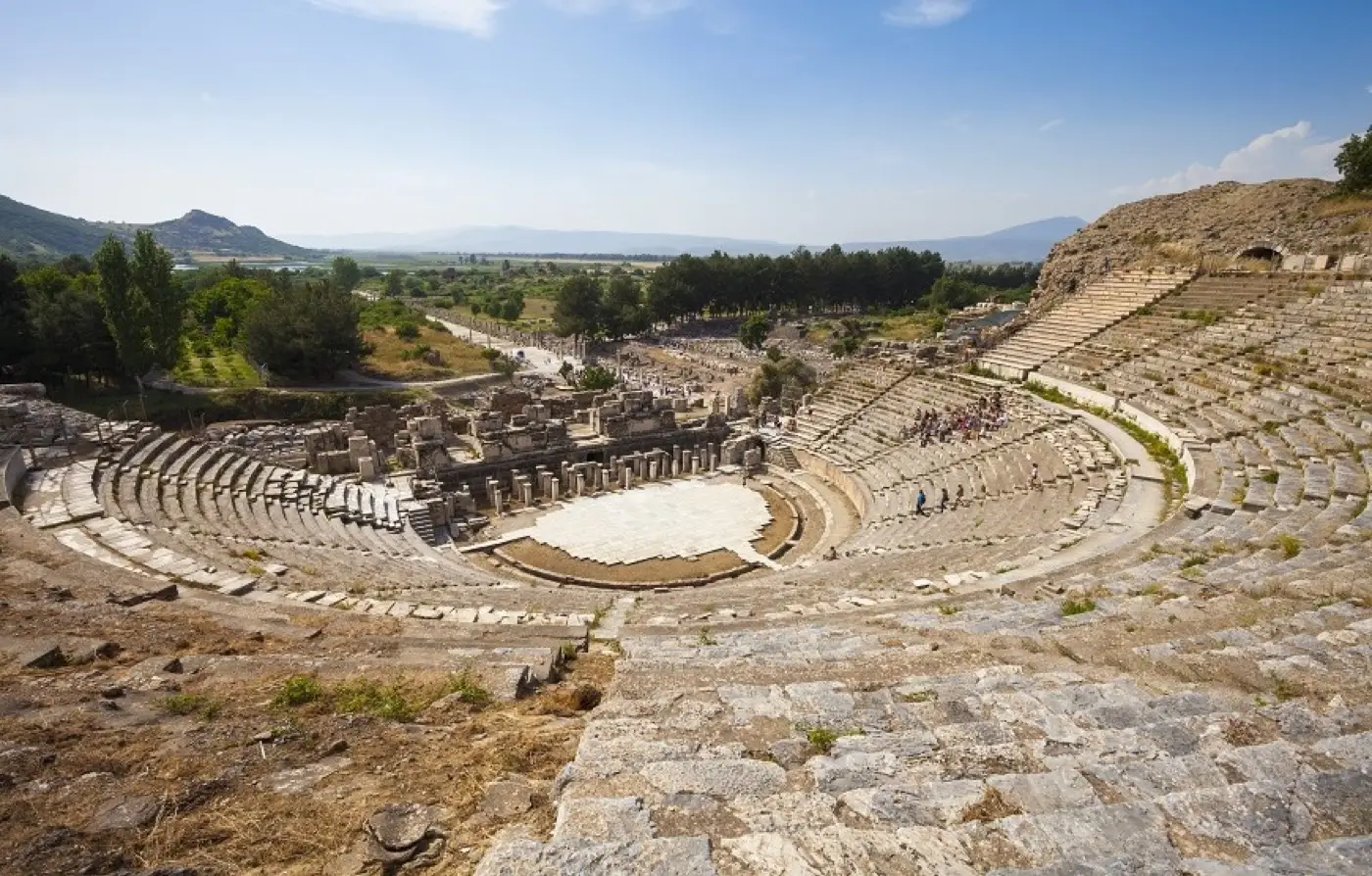
The theatre is set into the side of the hill that was once the city's prehistoric mound, with seats for several thousand spectators and inscriptions carved on its walls, including letters from Roman emperors confirming the city's privileges.
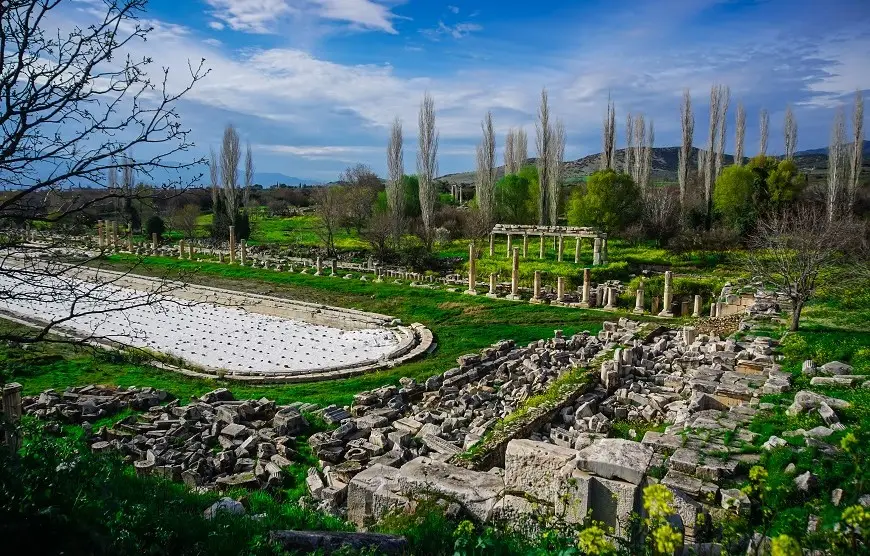
The bouleuterion (council house, also called the odeon) is small and elegant, with semicircular marble seating in excellent condition. Nearby, the Hadrianic Baths and the long pool of the South Agora, known as the Place of Palms, show how comfortable life in a prosperous Roman city could be.
The Aphrodisias Museum and the sculpture school
The Aphrodisias Museum, beside the entrance, is one of the best site museums in Turkey and an essential part of the visit. It displays portrait statues, reliefs, sarcophagi and decorative sculpture found in the city, many of them in remarkable condition. A large dedicated hall shows the Sebasteion reliefs in their original arrangement, at eye level.
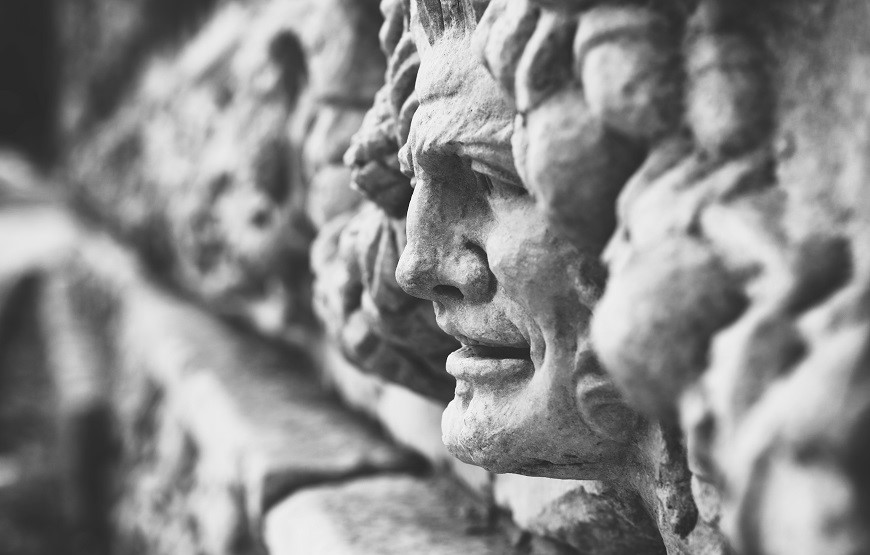
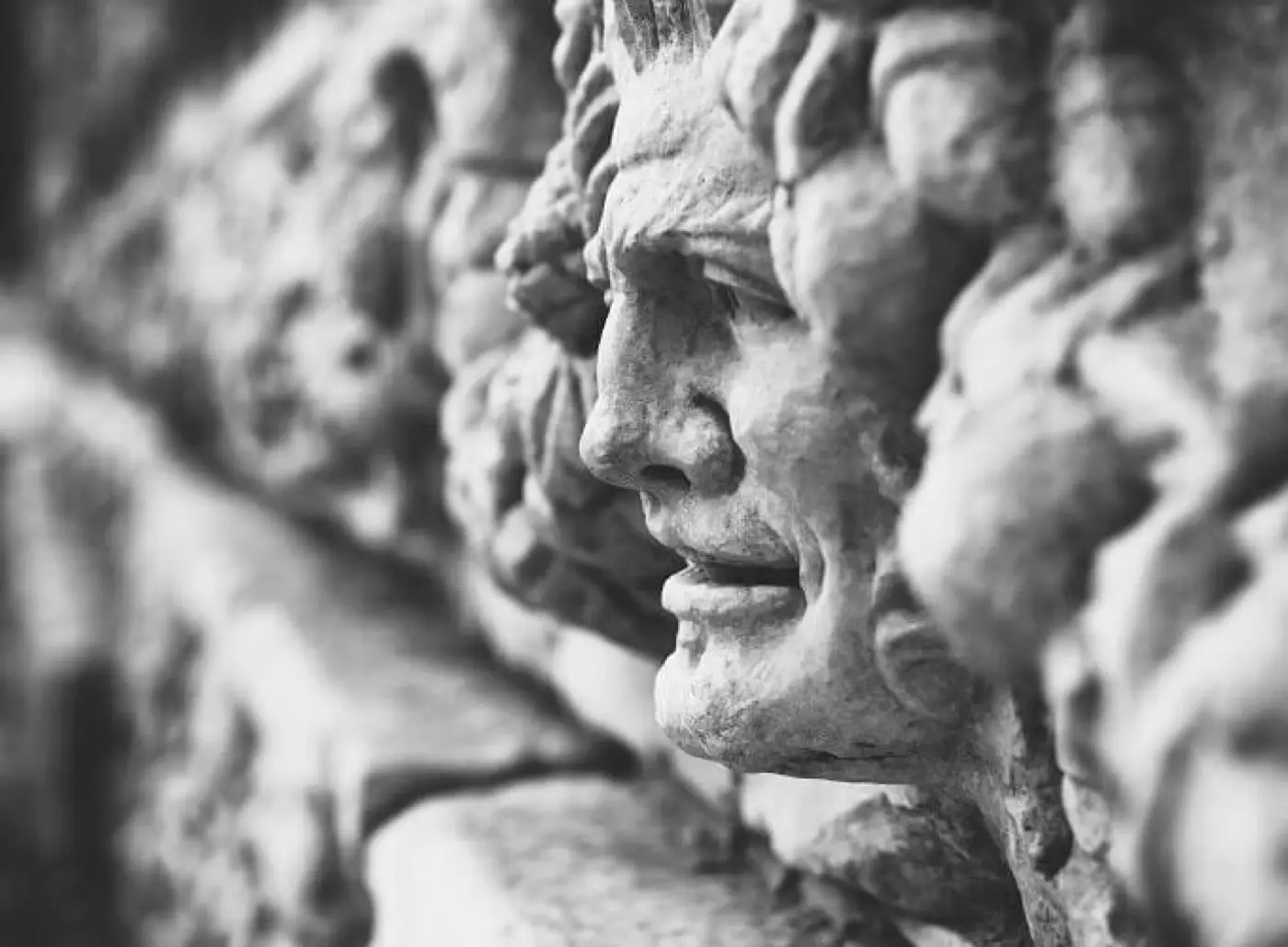
The so-called school of Aphrodisias was not a school in the modern sense but a long tradition of workshops. Sculptors from the city signed their work, and their signatures have been found on statues far beyond Aphrodisias, including in Rome. Excavations even uncovered a sculptor's workshop with unfinished pieces, showing how a statue was roughed out and then finished. Look for the expressive late Roman portraits; they are among the finest anywhere.
Geyre village
Geyre is the small village beside Aphrodisias, close to the town of Karacasu. Its name echoes "Caria", the ancient name of the region. The original village stood among the ruins until it was relocated during the 20th century to allow the excavations to proceed. Today it is a quiet farming village with a few cafés and places to eat near the site, and a good spot for lunch before or after your visit.
Day trip from Pamukkale
Aphrodisias is an easy day trip from Pamukkale, about 1.5 hours away by car, roughly 100 km. Most travellers visit on the drive between Pamukkale and the Aegean coast rather than as a return trip. The road runs west through the Büyük Menderes valley before turning south into the hills towards Karacasu and Geyre.
Typical drive times:
- From Pamukkale / Denizli: about 1.5 hours.
- From Selçuk / Ephesus: about 2 to 2.5 hours.
- From Dalyan or the Muğla region: about 2.5 to 3 hours.
A good plan is to leave Pamukkale after an early morning on the travertines, arrive at Aphrodisias late morning, spend two or three hours there, and continue to Selçuk for the night. You could also reverse it on a route from Ephesus to Pamukkale. The site is open and exposed, so in summer arrive in the morning or late afternoon and carry water.
For practical road advice, see our driving in Turkey guide.
Aphrodisias on our routes
Aphrodisias fits naturally into any route through the Aegean region:
- Istanbul, Ephesus and Pamukkale: the classic Aegean loop, where Aphrodisias slots in between the two headline sites.
- Istanbul to Fethiye: from Troy and Pergamon down to the coast, with room for an Aphrodisias stop.
- Grand Turkey for Summer: a long journey combining Istanbul, Cappadocia, the coast and the Aegean.
Our Turkey road trip itinerary and self-drive Turkey guide show how these stops connect.
Plan it as a self-drive trip
Aphrodisias is one of those places that few coach tours include, which is exactly why it feels special. With your own car, it becomes an easy half-day between Pamukkale and Ephesus, with time for lunch in Geyre and the museum at your own pace.
Tell us your dates and interests, and we will design a personal itinerary that includes the sites you care about, with hand-picked hotels, a rental car and support throughout your trip.